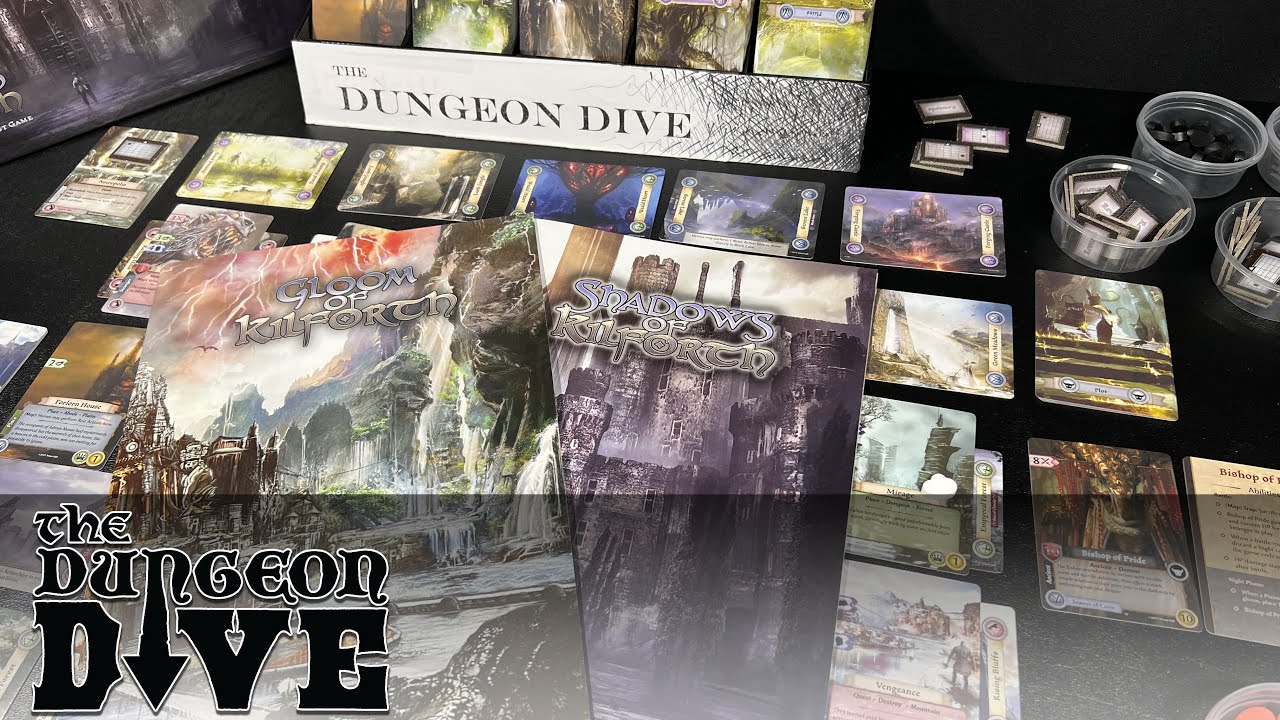
Daniel (@dungeondive) runs Gloom of Kilforth and Shadows of Kilforth as one combined set — a diabolist werewolf, three chapters into a saga, racing a twenty-five-turn night deck against the Bishop of Pride.
The land is a five-by-five grid of location cards; challenges are dice pools where fives and sixes count as successes, accumulated across multiple actions within a single turn. Hit points double as action points, so damage costs you tempo as well as life.
Two design details earn his admiration. The first solves the problem of combining sets: when a card demands a specific named location that may not be in play, you draw a token that points at a grid position instead. Elegant, and it makes mixing the boxes trivial. The second is that rewards arrive as rumours rather than items — you don’t take the helm you won, you learn where it is and go fetch it, turning every reward into a small side quest.
His two cautions are honest. The narrative is dots, not prose: you connect them or the game reads dry, and he admits he isn’t always in the mood. And it is fiddly — keyword-dense, exception-heavy, and unforgiving of long gaps between plays. Excellent documentation and a whole sheet of official variants soften both.
Kilforth hands you narrative dots and expects you to join them. Do you want a game to write the story, or leave room for you to?