The Gates of Arkham (Mythos, Part I)
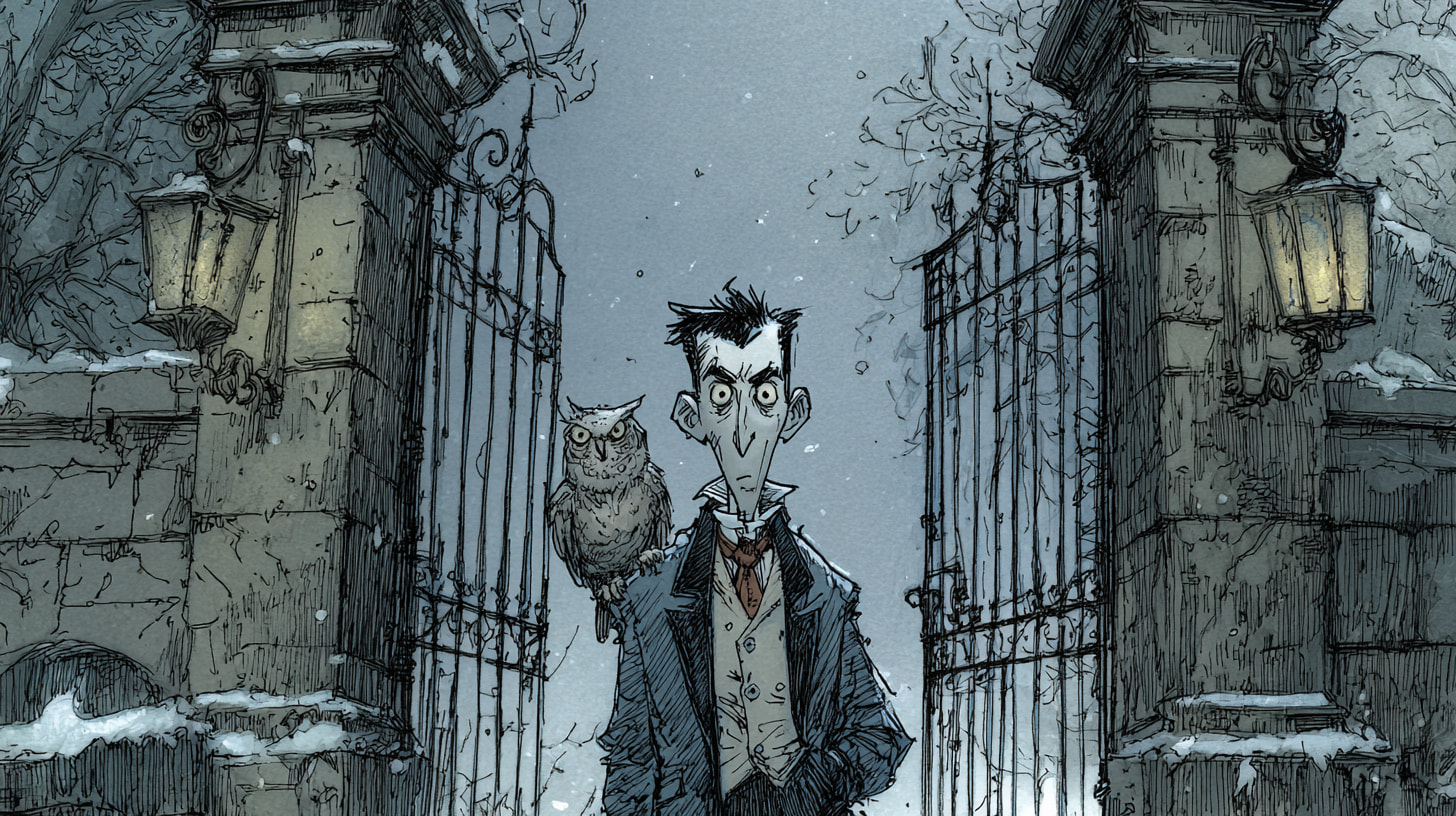
A travelling museum has arrived at the archive. The crates came unlabelled save for a wax seal showing a thin man in a yellow mask, and when we prised the lids open the exhibit unpacked itself: tile maps of a small Massachusetts city, eight starter investigators with their fates already half-written, a green-bordered great old one catalogued as Nyarlathotep, and a hardbound rulebook so lovingly made that I have placed it on the locked shelf alongside the Cultes des Goules.
Daniel (@dungeondive) has been kind enough to walk us through the collection.
We begin in 1918, or perhaps 1928, or perhaps 2018 — the provenance is disputed. Arkham Horror 3rd Edition — Take a Look opens the exhibit with a genuine scholar’s preface: most “Lovecraftian” games, Daniel reminds us, are inspired not by Lovecraft himself but by the collaborative Mythos that grew around him. Chambers, Dunsany, Smith, Lumley, Merritt, Machen — the roll-call of contributors is longer than the canon admits. Then the box opens. Nikki Valens’s modular, scenario-driven design replaces the old sprawling board, and the deluxe rulebook — with Richard Launius’s origin essay and forty pages of Arkham lore — takes its place on my lectern.
The review that followed a month later came perilously close to declaring the game a masterpiece. The Archive deck unfolds mysteries through a Codex you assemble as you play; event decks tie mechanism to narrative so tightly that even choosing your starting item carries weight. Daniel mourns Valens’s departure from Fantasy Flight — a loss, he suggests, on the order of a great library burning.
Six years on, the comparative study places Arkham 3e alongside Fallout and Skyrim, three grand card-driven adventures. 3e wins on rulebook and table presence; Skyrim wins on exploration and combat; Fallout carries the middle. All three earn permanent shelves. Skyrim, it is noted, is “aggressively ugly.” I cannot disagree.
Then the museum opens its older wings. Curse of the Dark Pharaoh — the first and weakest of 2e’s expansions — nonetheless delivers Ashcan Pete being knocked unconscious by a branch and washed downstream to face a Shoggoth in a graveyard, which is the kind of first-turn story no Eurogame will ever produce. The Appendix M segment recommends three volumes: Harms’s Cthulhu Mythos Encyclopedia and Pedersen’s two auction-catalogue anthologies, the Starry Wisdom Library and Dagon Collection — the latter of which, I confess, I had thought lost in the 1928 Innsmouth raids.
The first big-box expansion, The Dunwich Horror, brings Jim Culver the musician (a thematic favourite), Diana Stanley the redeemed cultist, optional injury and madness decks for the roleplayer, and the splendid For the Greater Good quest that sacrifices your investigator to save the game. Daniel condemns the gate-burst rule and the expansion Mythos deck, but the encounter cards, allies, spells, and items all migrate permanently into his base game. The Appendix M here is a small banquet: Lovecraft, Lumley, Smith, Shea, Langan, Tierney — a reading list for a long, quiet winter.
We then take a guided walk through the city itself — Arkham Asylum where the knowledge-broken are hidden; South Church where Father Kyrianos trades monsters for blessings; the Curiosity Shop where Oliver Thomas’s antique hoard conceals swords of power; the Silver Twilight Lodge where Carl Sanford conducts ritual beneath respectable veneer; and the Orne Library’s restricted stacks, guarded by Abigail Foreman. Each location is a story engine, and each earns its place on Daniel’s map.
Finally, the torch passes once more. Arkham Horror RPG: The Hungering Abyss returns the line to its Call of Cthulhu roots — but not to co-op, which Daniel mourns. The Dynamic Pool System is elegant (D6 pool as health and actions, Horror Dice for mental wounds), the physical components generous for £35, but the scattered rules and absent character creation frustrate. He remains curious about the full release.
And — because no museum is without its odd adjunct — we have also accessioned Buffy the Vampire Slayer, which Daniel pitches as Arkham Horror Jr. meets Pandemic Jr. Lynnvander’s design, Jasco’s production, and a remarkably elegant scaling mechanism where every use of your special token draws an Event card. Glorificus will not defeat herself. The Master waits in his sarcophagus for a Slayer to assemble the right items. The apocalypse counts to thirteen.
The Exhibit Catalogue:
- Arkham Horror 3rd Edition — Take a Look
- Arkham Horror 3rd Edition — Review
- Arkham 3e vs. Fallout vs. Skyrim — Comparative Review
- Curse of the Dark Pharaoh & Appendix M (Arkham 2e)
- The Dunwich Horror Expansion (Arkham 2e)
- Top 5 Places in Arkham City
- Arkham Horror RPG — The Hungering Abyss (Starter Set)
- Buffy the Vampire Slayer — The Board Game
Eight files added to the Mythos wing. The exhibit remains open. Part II of the series will venture beyond Arkham proper — to the Mansions of Madness, to Elder Sign, to Eldritch Horror, and to the older Cthulhu games that preceded them all. The Keeper has set aside shelf-space in anticipation.
303 transcripts • 382 posts archived
– The Keeper
Observes that the gate-burst rule destroys hard-won elder signs, which is a perfectly fine metaphor for the entire project. Every seal is provisional. Every catalogue grows.