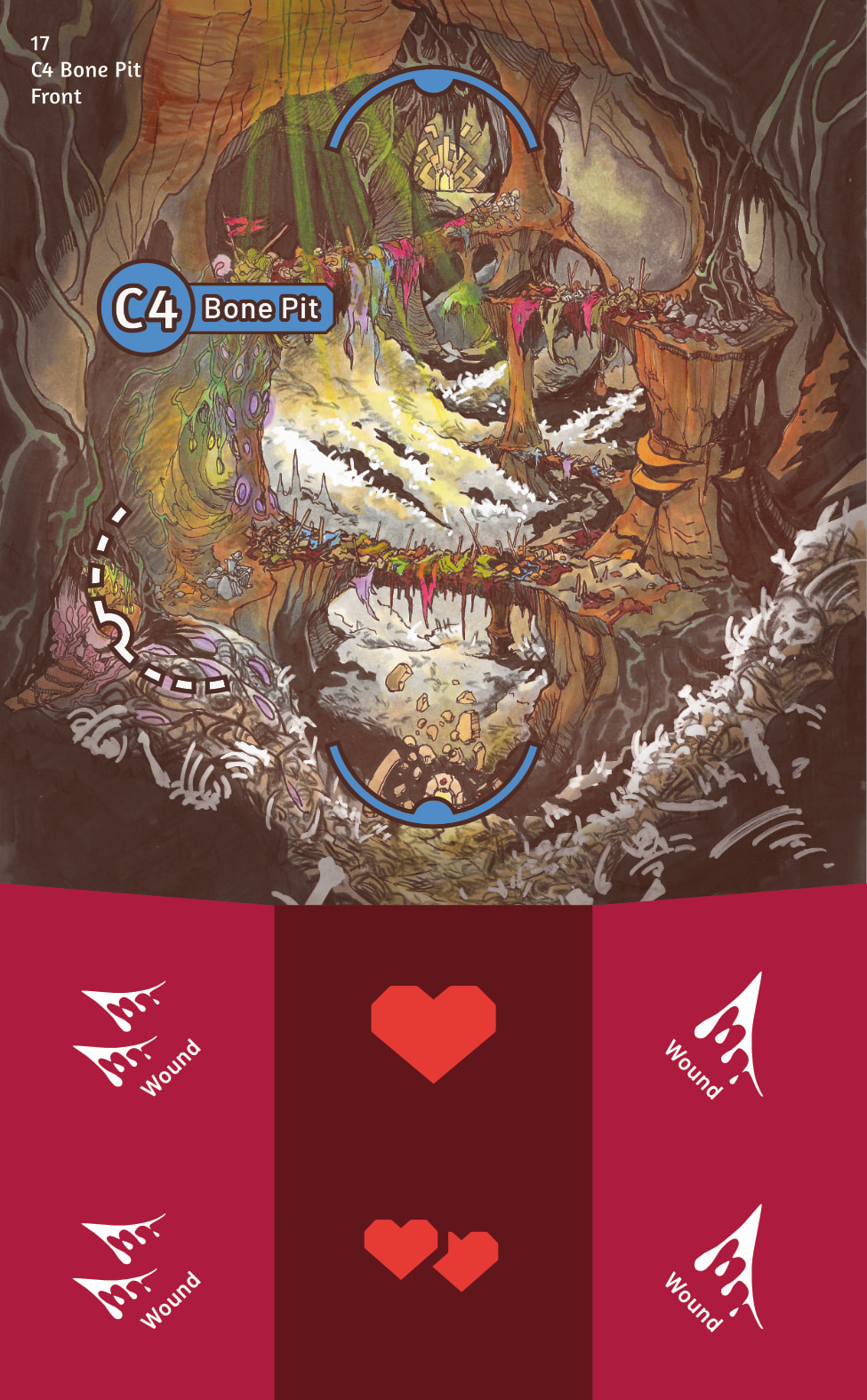
Ziggurat is ready for a blind playtest

You may have observed me chipping away at the Ziggurat for the last few years, so this post has been a long time coming: the game is feature complete and rules complete, but I need fresh eyeballs.
What is it?

For anyone who’s missed the long version: Ziggurat is a solo adventure game that blends the dice-rolling skill checks of a solo RPG with the tactical card play of an LCG. You follow a structured quest arc (some short, some longer) punctuated by random encounters and a host of strange denizens that haunt the path. You play an eternal hero, a single soul reborn across the ages, drawn one last time to an enigmatic ziggurat to face a destiny you never chose.

The prose is unashamedly last century’s sword-and-sorcery pulp, with a penchant for improbable encounters on stranger worlds. If you’ve a soft spot for Vance’s Dying Earth and Cugel, Leiber’s Fafhrd and the Grey Mouser, Moorcock’s Elric and Hawkmoon, or Wolfe’s Severian, you’ll have the vibe.

What I’m after

A small handful of enthusiastic guinea pigs.

Ziggurat doesn’t run on standard dungeon-crawler machinery. The core mechanisms are a bit different, which is why clear rules matter, and why blind feedback is so valuable. What makes sense to me may not land for others.

What you’d get

A physical prototype, posted to you from The Game Crafter. Fair warning: shipping takes roughly four weeks to arrive, so this is a commitment that plays out over a couple of months, not a weekend.

What I’m asking for

This is a blind playtest, and that word matters. I need you to open the box and learn the game entirely on your own. I want you to endure the pain and suffering of struggling through the rulebook and the tutorial exactly as a stranger who bought the game would.

I’ll interview you about what was confusing; where the rules tripped you up, what the tutorial failed to explain, what you had to re-read three times. Once we’ve done that interview, the phase glove comes off. I’ll answer anything and everything to get you up to speed for the second, thrilling phase: dying, often.

Then I’d be grateful if you would embark upon one short quest and one long quest of your choosing, and report back:

  • Rules clarity — anything ambiguous, contradictory, or just dumb.
  • Balance — too hard, too easy, or about right? The porridge rating.
  • Fun — the big one. What got you on your feet? What made you decide it was time to change the cat litter? I need back-end of the bus bluntness.

Sound like you?

Reply here or drop me a direct message with a line on:

  • How often you reckon you can play; this could play out over weeks, so steady beats fast.
  • Your rough location (for postage).
  • That you’re up for the blind-learning bit… it’s the part some people find frustrating, so go in eyes open.

Thank you, genuinely. After years of tinkering, handing it over to bona fide dungeon plungers is equal parts terrifying and exciting.

8 Likes

Congrats! This is a big milestone.

3 Likes

Could you maybe post a PDF of the new rules? I’d love to take a look at them.

1 Like

The PDF is a bit large (~65Mb) but you can reach the living document version here:

The Google Doc can be downloaded in various formats, including PDF. It’s about 40 pages A4 but there’s no typesetting and the fonts pretty chunky which I find helpful :slight_smile:


PS. Happy to answer any questions folks may have based on the rules!

3 Likes

I’ll read through the rules, and happy to play test. I’m in the UK though, so postage cost of physical items would be high - feel free to prioritise people closer to you over me :+1:

2 Likes

Ps. I was listening to the Rule of Carnage podcast last night. They were saying that play testing other people’s early game prototypes is a good way to improve as a game designer because you get to see all the early mistakes that never make it to publication, and so get better at avoiding such pitfalls yourself.

2 Likes

Playtesting other people’s games is a great way to learn, free of the angst of having your ideas judged too harshly :wink:

Ziggurat is probably best described as a late-stage prototype, having already survived a fair amount of self-inflicted angst and heartbreak.

Now if I can just persuade the whole catastrophe to explain itself…

2 Likes

Where would you like the feedback and questions? In this thread or elsewhere? I’m on my lunch break and browsing your Google doc

Here is fine for a casual run through. If you wanted a more comprehensive discussion you might try fullasagoog.com

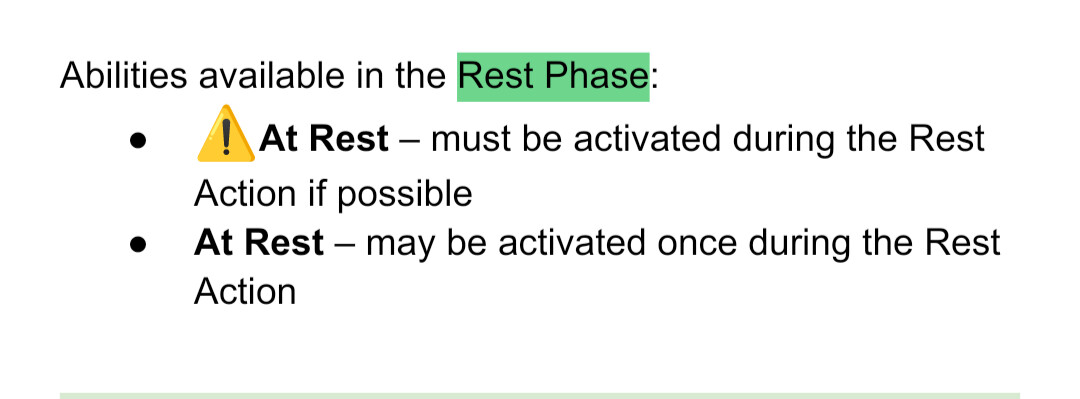
Admittedly I haven’t got to the end of the doc yet, but first question: how many phases are there?


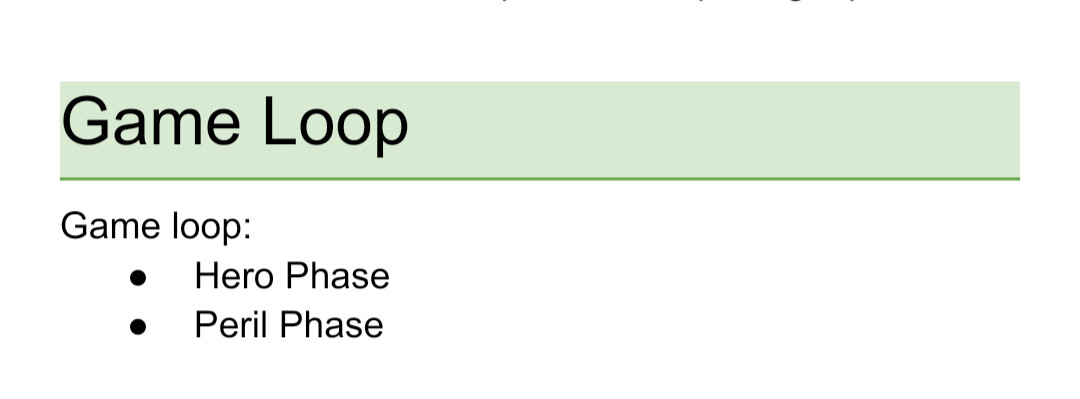
Vs

(This is the first thing that made me scroll up and down in case I’d misread something)

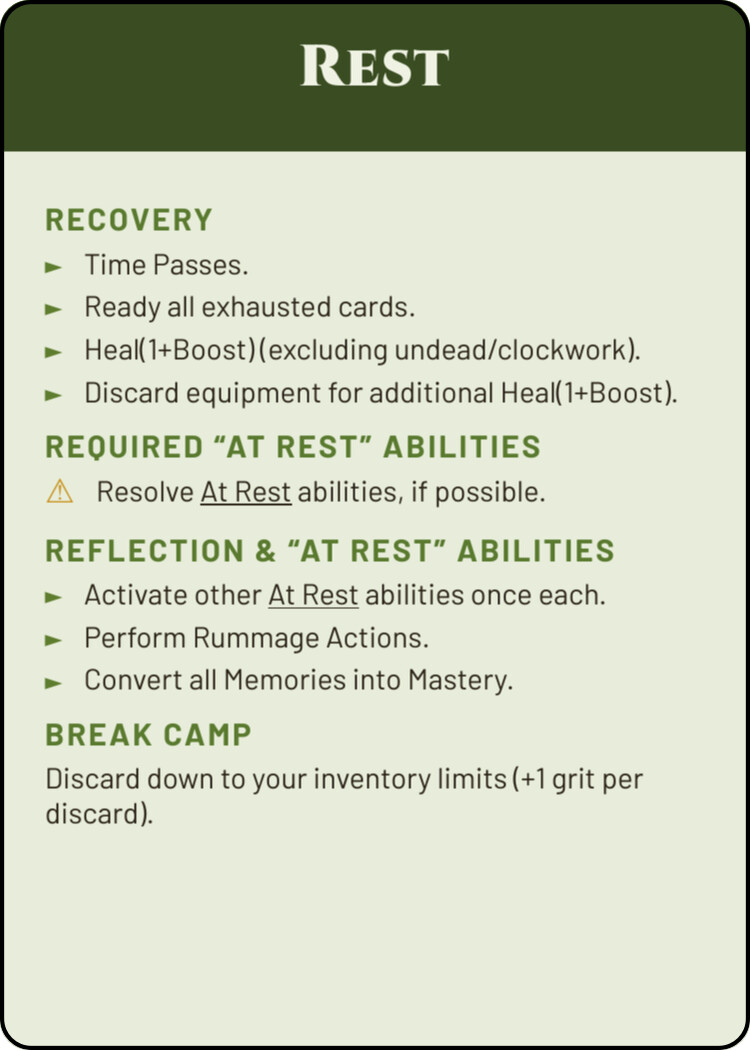
Rest Phase – should be Rest Action.


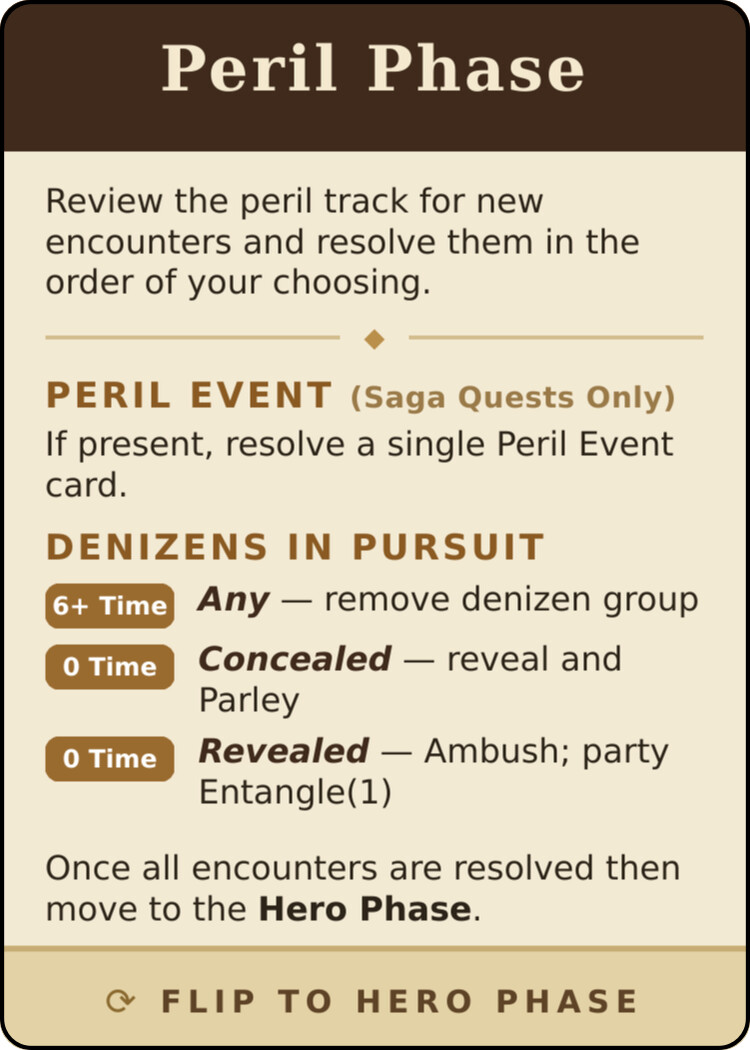
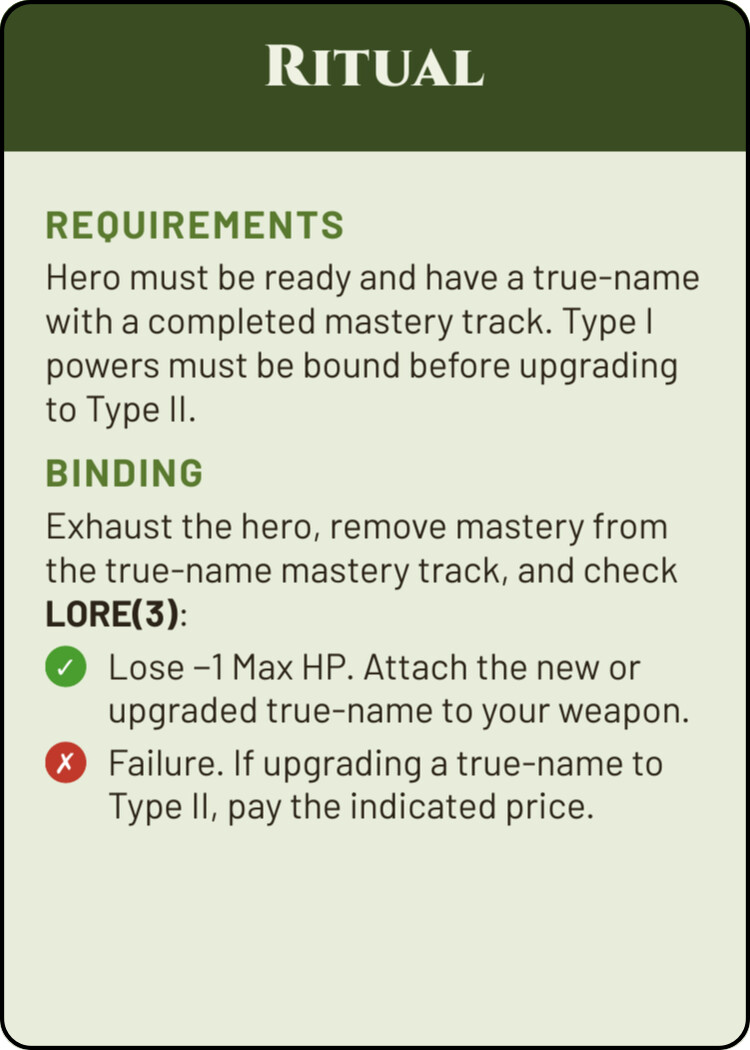
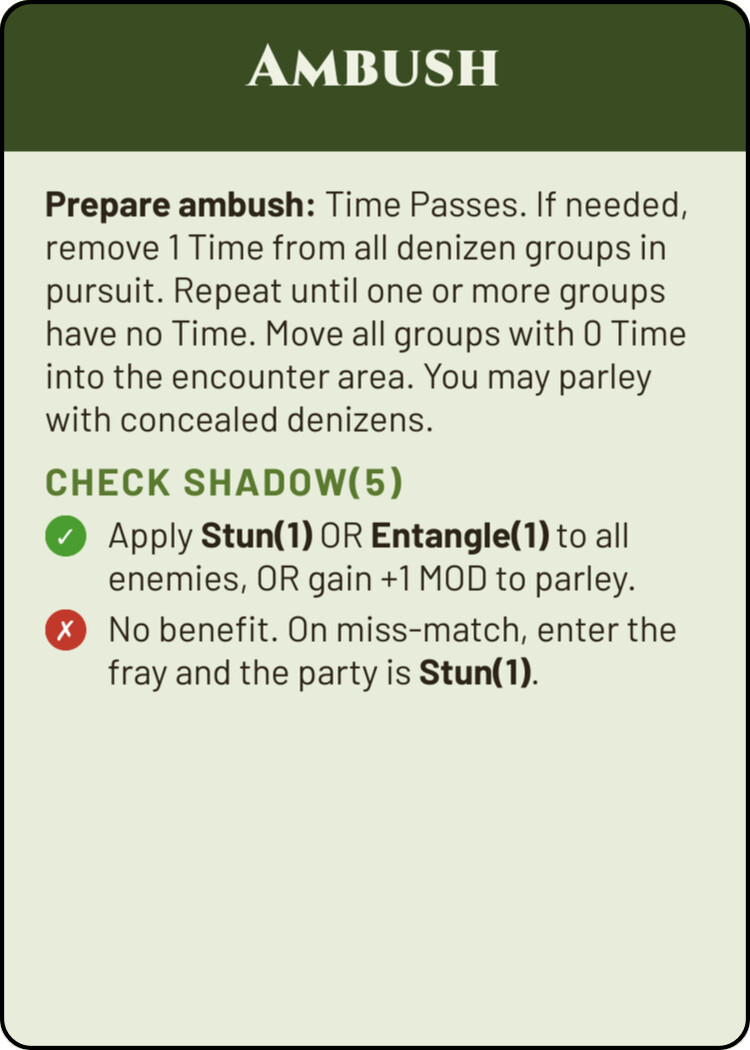
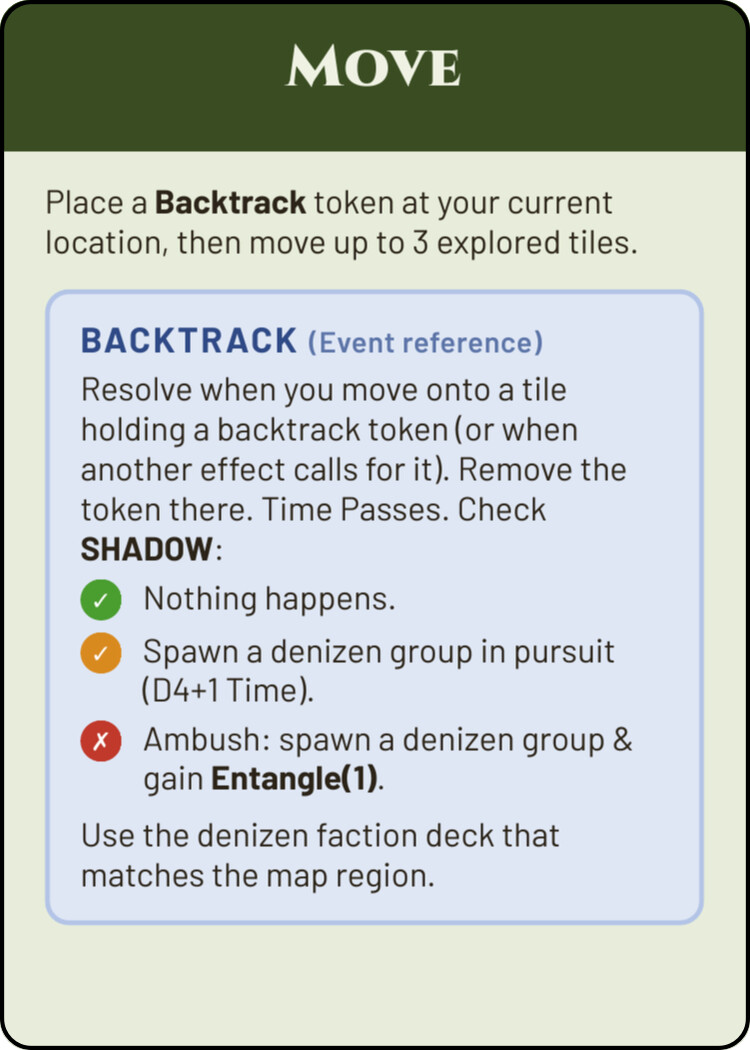
The standard game loop only has two phases:

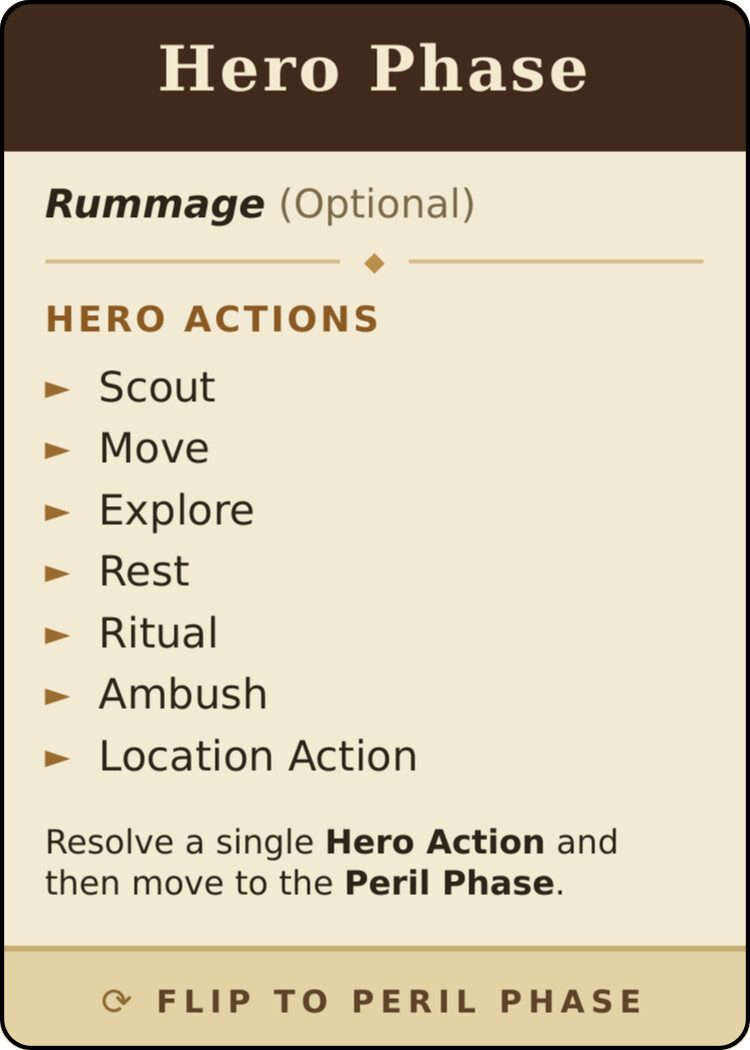
You complete one hero action, and then switch to the peril phase. Very often there’s not much to do in the Peril Phase and you move back to taking another hero action. Peril Phase is a sort of clean-up at the end of each turn.


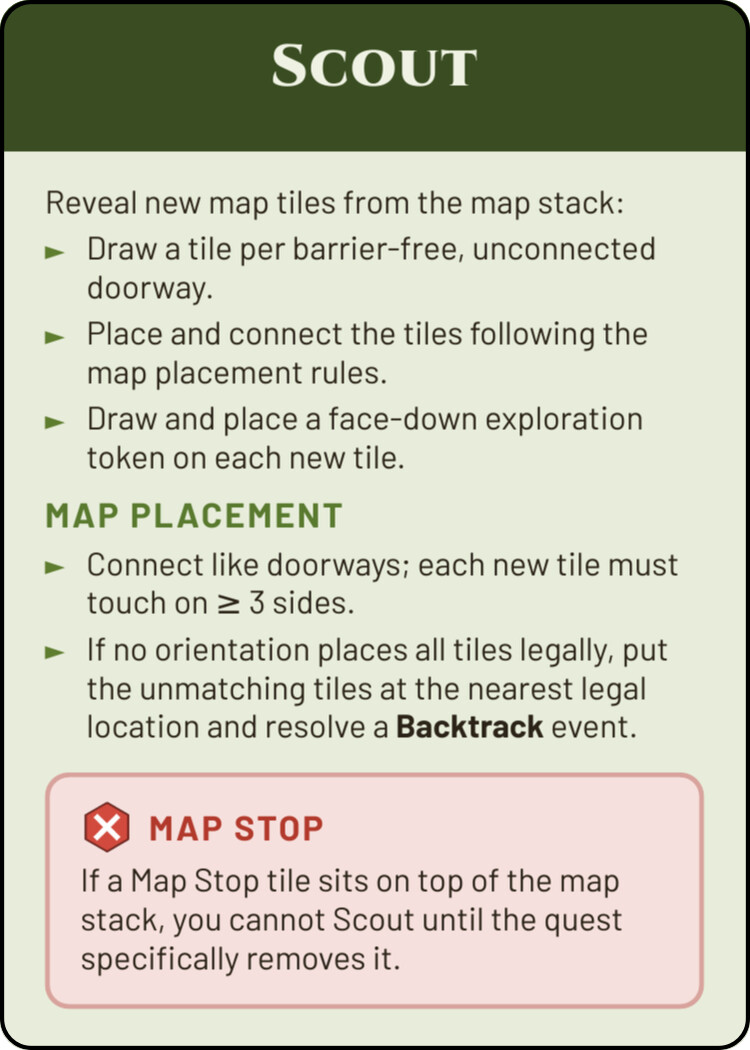
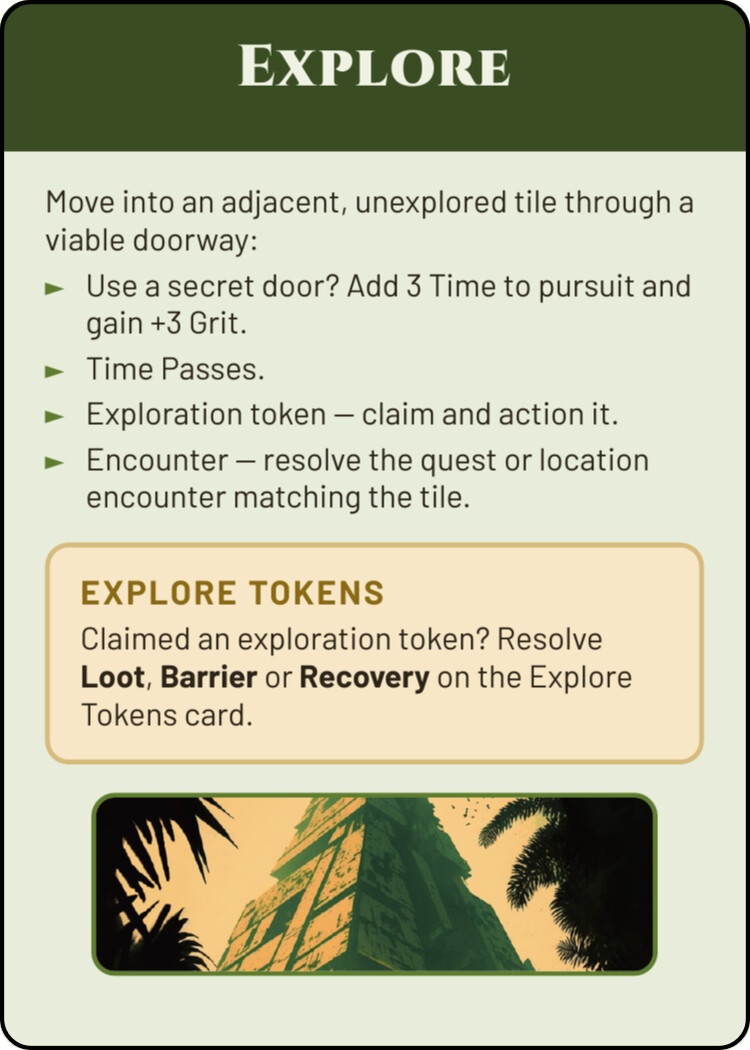
PS. these are a few player aids I’m working on that just summarise the rule book so you don’t need to refer to it during play… with any luck :four_leaf_clover:

1 Like

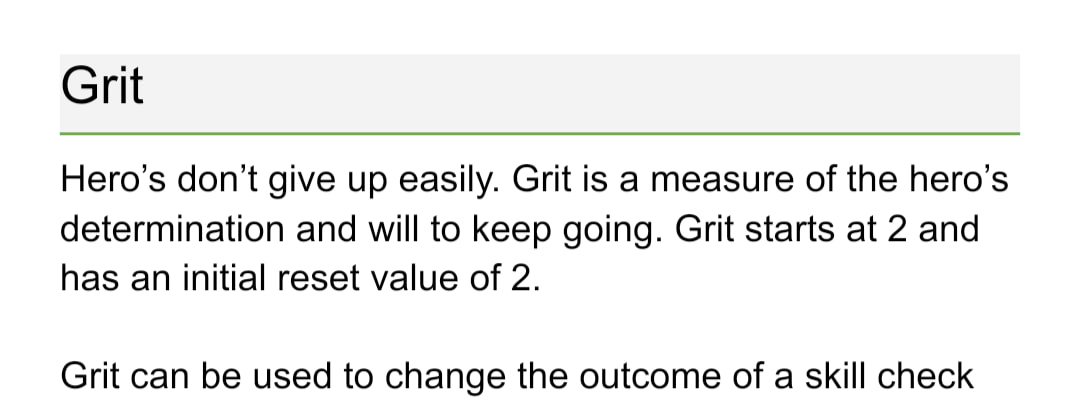
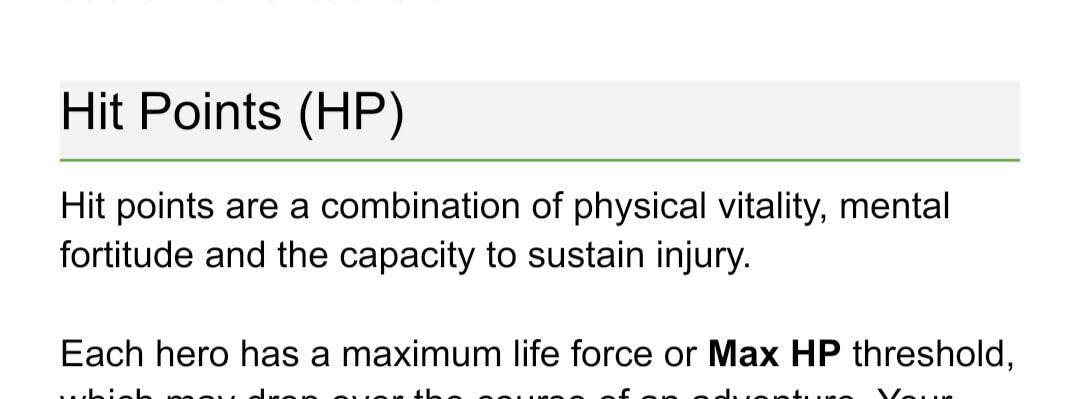
Question 2 that isn’t a rules question, more of a terminology observation. I perceive HP as physical endurance and Grit as mental endurance.


Should the words “mental fortitude” be removed from the description of HP?

E.g.
Hit points are a combination of physical vitality and the capacity to sustain injury.

Hmm.. I make a short description of these in the Hero section to explain their setup. They are both described in more detail elsewhere.. especially GRIT.

HP is pretty standard Hit Points.

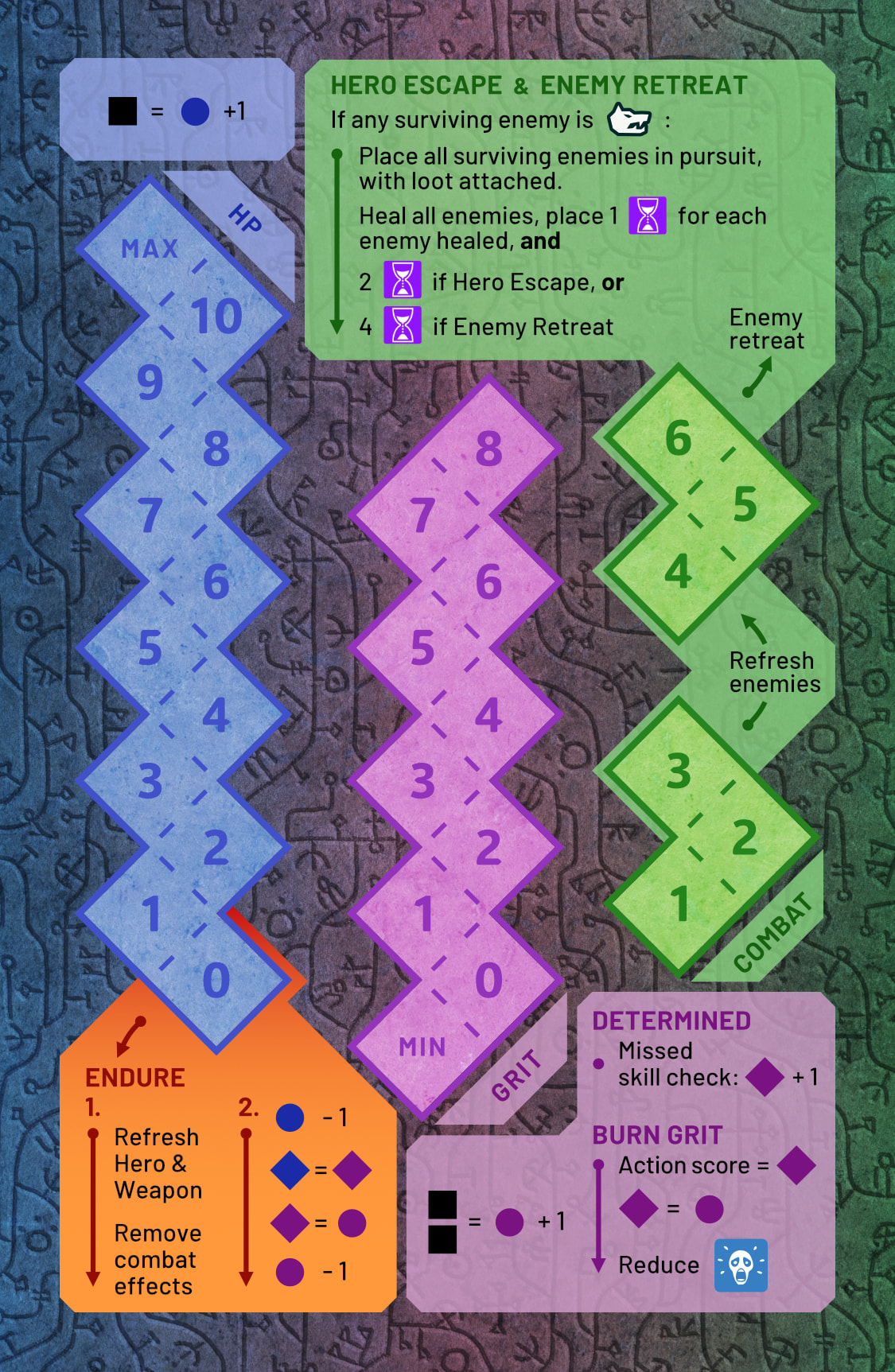
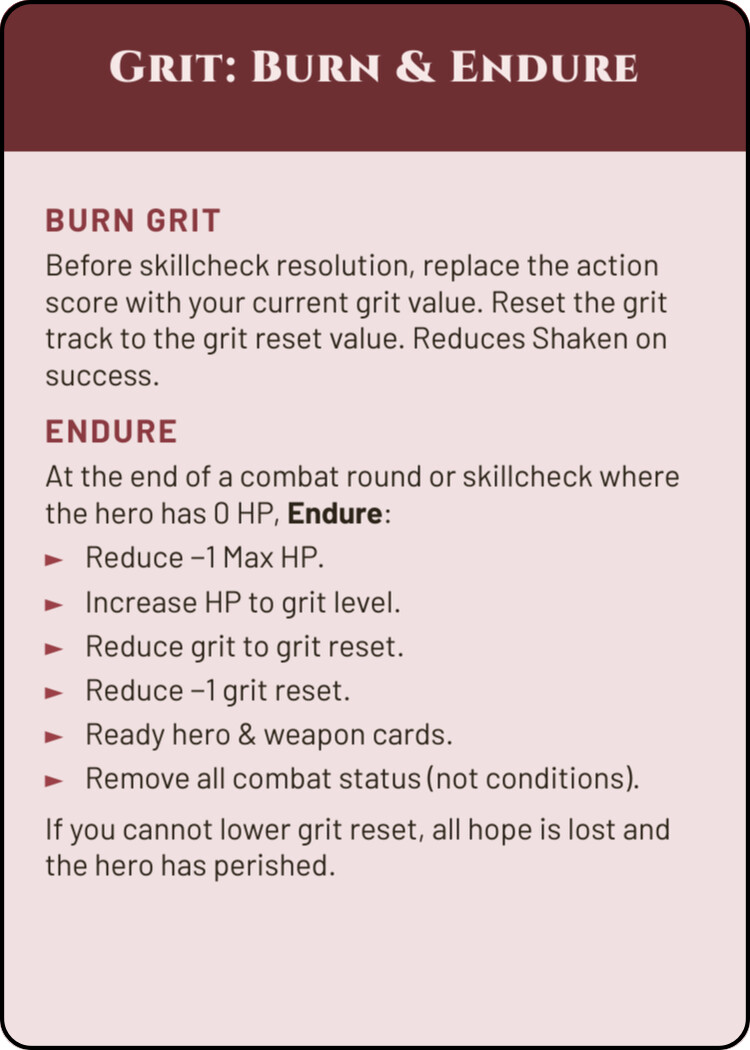
But GRIT is part of an interesting dice mitigation mechanic. Your grit goes up and down during the game for various reasons. At any time you can “burn grit” to change the outcome of a skillcheck roll to the value of your grit track.

And if you ever hit 0HP you don’t die; instead you Endure. And your hit points will bounce up to where your grit track resides.

1 Like

So the required at rest activities can be avoided by not taking a rest action?

By the way, I love that breaking camp is the point where you discard the over encumbrance, very neat. Much better than immediately discarding items like slot based encumbrance games

1 Like

Yes, I like the rules. It’s just that “mental fortitude” and “determination and will” are the same thing to me

1 Like

Yes. You can just keep soldiering on avoiding Rest until you perish.

Interestingly, it used to be part of a set cycle of actions.. you move, explore, rest, etc. But I changed all that some time ago to give the player more agency. Resting can be bad if you are pushed for time; you can’t avoid Time Passes when you rest.

Agree! It especially makes sense when you consider the limit on the number of companions you can retain. It never made thematic sense that they would abandon you in the thick of things. And its another reason why you might avoid resting :wink:

1 Like

Ah, yes. The wording is a little ham-fisted.

HP is supposed to be more a measure of the hero’s “vitality” rather than a direct representation of physical injury. Hence this intriguing mechanic of bouncing off zero when you Endure – you get a kind of second wind. But if your grit is low at the time… the bounce is a bit lack lustre and you will likely be snuffed out soon.

I have struggled over the years with HP; health points, hit points, blah. I have played with Vitals, Vitality, Lifeforce and others. But in playtesting HP just makes immediate sense to people.

I keep wondering if I should trade the simplicity of HP for a more thematic name.

Reading further on I can also see attack phase and defense phase mentioned.

This is a very thought provoking thread, a Google search for “phase turn action round” shows that lots of people have struggled with finding a naming convention, and there is no common consensus. E.g.
https://boardgamegeek.com/thread/878251/turn-round-phase

A bit of a rabbit hole in game design!

It would make it easier for me to learn the rules if there is only one set of phases.

Maybe attack and defend are actions?

1 Like

HP is something that Cairn tries to redefine for the same reasons.

“Hit Protection
Hit Protection (HP) reflects a character’s ability to avoid damage in combat.
This measurement does not indicate a character’s health or fortitude, nor do they lose it for very long.”

1 Like

Ah, for the self-flaggelent I have a gift… an update to the Ziggurat Rules (v0.13)

3 Likes