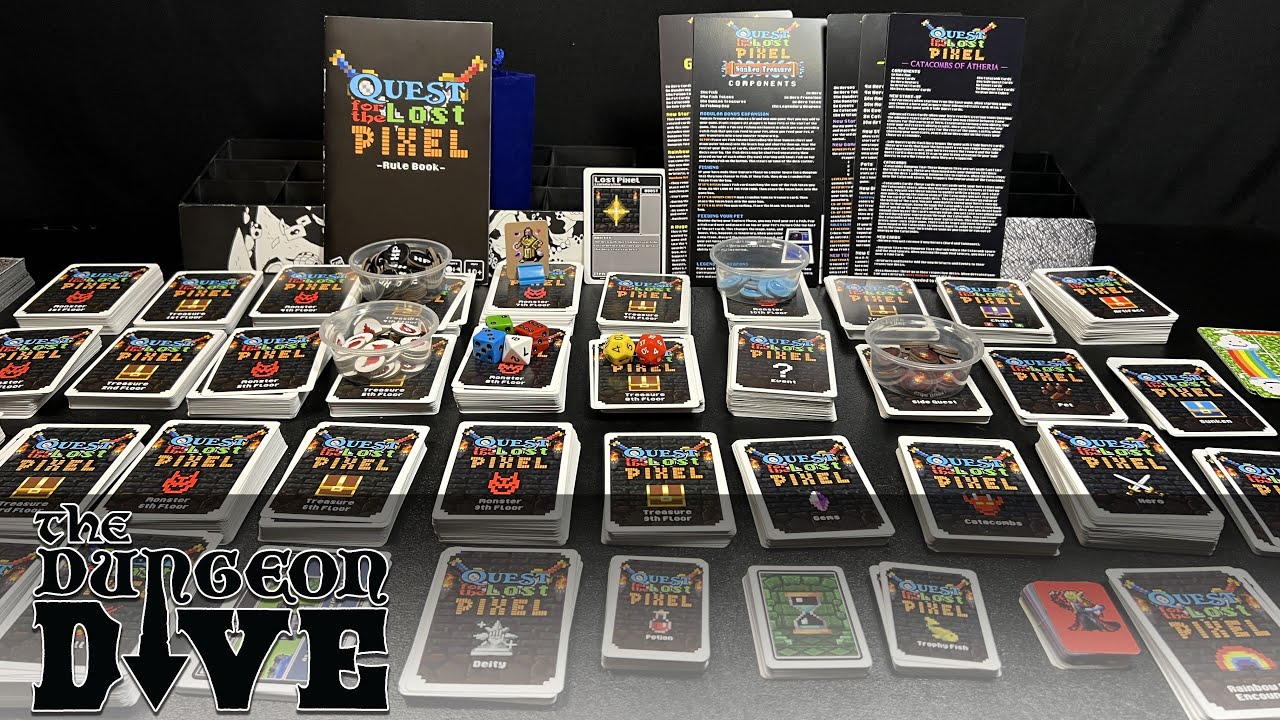
Daniel (@dungeondive) inducts Quest for the Lost Pixel into the Dungeon Dive Masterclass—his personal hall of fame for games he holds in highest esteem. This isn’t merely a review; it’s a comprehensive anatomical examination of Peter Jank’s roguelike opus, component by loving component.
Full disclosure offered upfront: Pete and Daniel have become friends over the years, though the affection for the game predates the friendship. And Pete makes roughly 30 cents per copy sold, so this isn’t exactly a commercial favour.
Addressing the Critics: Yes, it’s expensive—but comparable to going all-in on Hero Realms or Fantasy Flight LCGs. Yes, the base game can feel easy—but updated rules limiting artifacts and the addition of Nightmare Mode address this. Yes, it’s swingy—but that’s rather the point of a roguelike.
The Component Cascade: Daniel methodically tours every element. Twenty-four heroes with unique abilities and advanced subclasses. Dozens of spells. Gems as powerful one-shots. Side quests for optional objectives. Deities offering blessings and restrictions. Ten floors of escalating monster decks. Artifacts. Legendary weapons. Cheat codes. The Catacombs (dungeon-within-dungeon). Risk and Reward set dungeons. Rainbow Rift alternate dimension. Fishing and pets. Potions with unknown effects. Village building for meta-progression.
The Verdict: “The quintessential dungeon dive game.” If you value cards, randomness, variety, simplicity, quick setup, zero-to-hero progression, press-your-luck moments, pets, spells, side quests, and sheer unrelenting fun—Lost Pixel delivers. The only missing element Daniel can conjure: an overland adventure mode connecting dungeons.
“If something happened to my copy, I would immediately buy a new one.”
What game, if lost to fire or flood, would you replace without a moment’s hesitation regardless of cost?