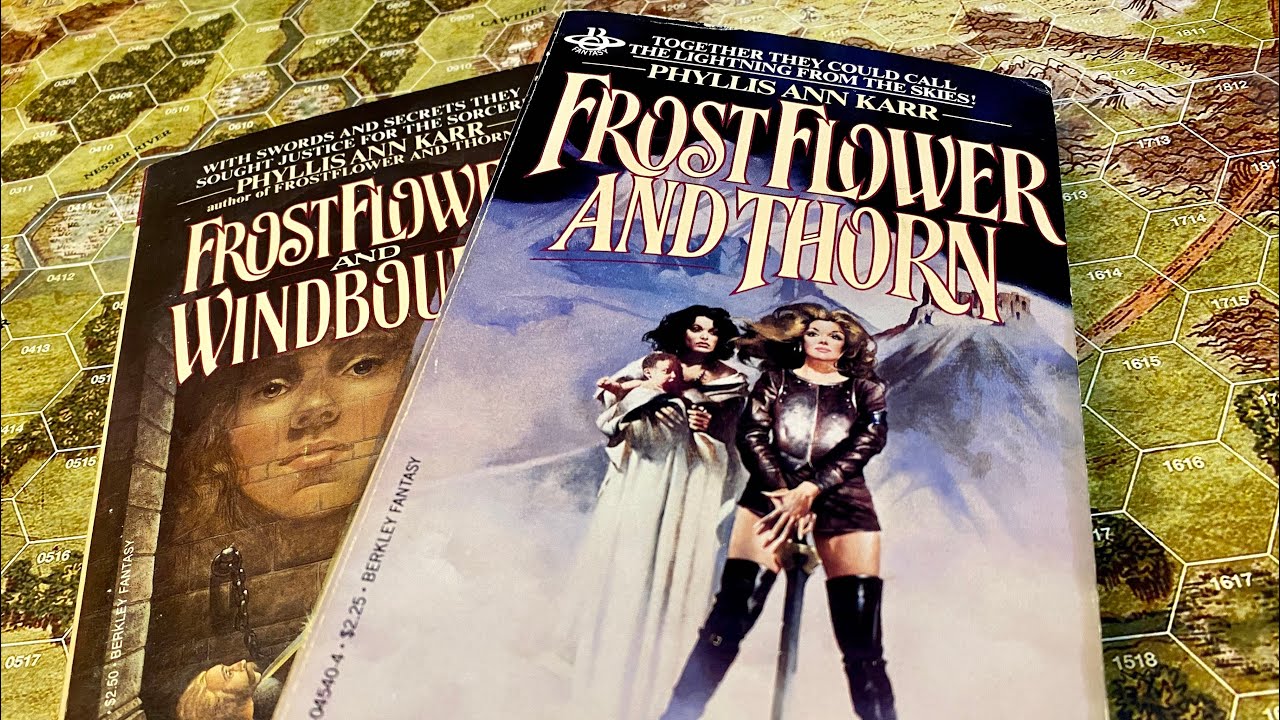
Daniel (@dungeondive) closes 2021 with Phyllis Ann Karr’s Frostflower and Thorn, the first female-authored work in this series and a landmark for feminist sword & sorcery fiction. This isn’t a lazy gender-swap—changing either protagonist to male would fundamentally break the story, as the plot hinges entirely on their female agency and the systems that both empower and oppress them.
Thorn is a mercenary swordswoman trapped by pregnancy, demanding an abortion to preserve her warrior status. Frostflower, a sorceress whose power derives from virginity, desperately wants a child. When Frostflower uses her magic to accelerate Thorn’s pregnancy, their choice creates ripples through interconnected systems of power: warrior guilds, priesthoods, and land-baron control all depend on constraining female autonomy.
Karr constructs intricate social layers where priests exploit the religious power women generate without understanding its true source. The book’s intimate focus and narrow geographic scope create pacing issues—by three-quarters through, narrative momentum flags. Additionally, oversized chapters (some nearly 60 pages) juggle multiple viewpoints and setpieces without natural breaks, making the story feel longer than necessary.
Despite structural imperfections, Daniel admires the unflinching exploration of how patriarchal systems weaponize female bodies. The brutality Frostflower endures isn’t titillation but demonstration of systemic oppression; Thorn’s growth reflects neither trauma redemption nor tragedy, but her inherent strength persisting through hardship.
How do you think Frostflower and Thorn challenges your assumptions about what sword & sorcery protagonists should be?