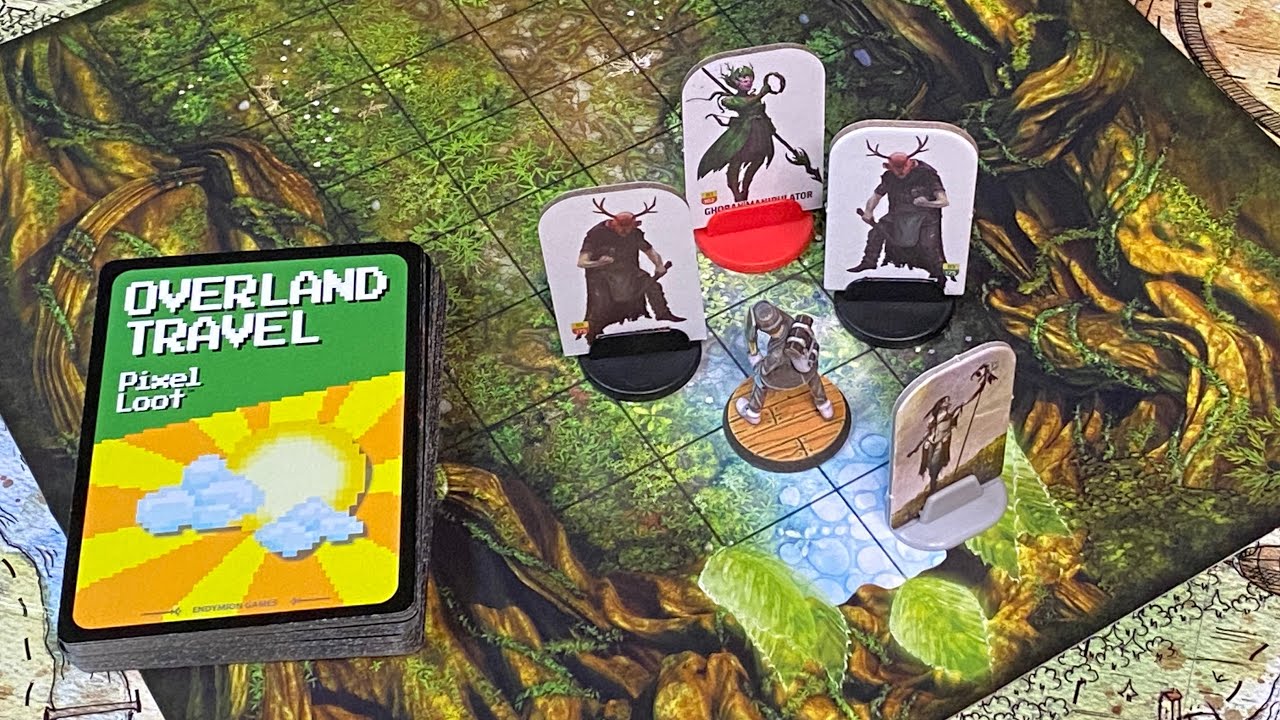
Daniel (@dungeondive) returns from a personal-life gap to resolve Session 4’s cliffhanger — Harlan and Reya facing the Hungry Mother and her two antlered forest goblins inside the fae realm. The session opens with a frank methodology aside: he runs through three different Scarlet Heroes NPC tables (Reaction, Attitude Towards Hero, Current Purpose) just to show what could govern the encounter, then commits to a straight combat anyway because the table didn’t beat the dramatic instinct.
The Hungry Mother is reskinned from Scarlet Heroes’ langsiar, with one bespoke tweak: a vine attack that forces a Dexterity save and a 1d8-direction jump if it lands. It is Daniel’s deliberate experiment in making solo combat more dynamic — give the boss a reaction-forcing power. The fight runs long, and Daniel calls it out plainly: by the third round it is two combatants standing toe-to-toe rolling d20s at each other, which is exactly the boredom problem he wanted to solve. He concedes off-camera dice are sometimes the right answer.
The trip home banks two character-introspection moments — a tarot-major-arcana question Harlan can’t yet answer (a deck is on order), and Reya’s scars sketched as a slavery-survivor backstory. Best plot move: the randomly-rolled hopping vampires get retconned into the cult’s endgame.
Is giving solo bosses a single reaction-forcing power enough to escape the d20-trade boredom of OSR combat, or does the problem require a deeper structural fix?