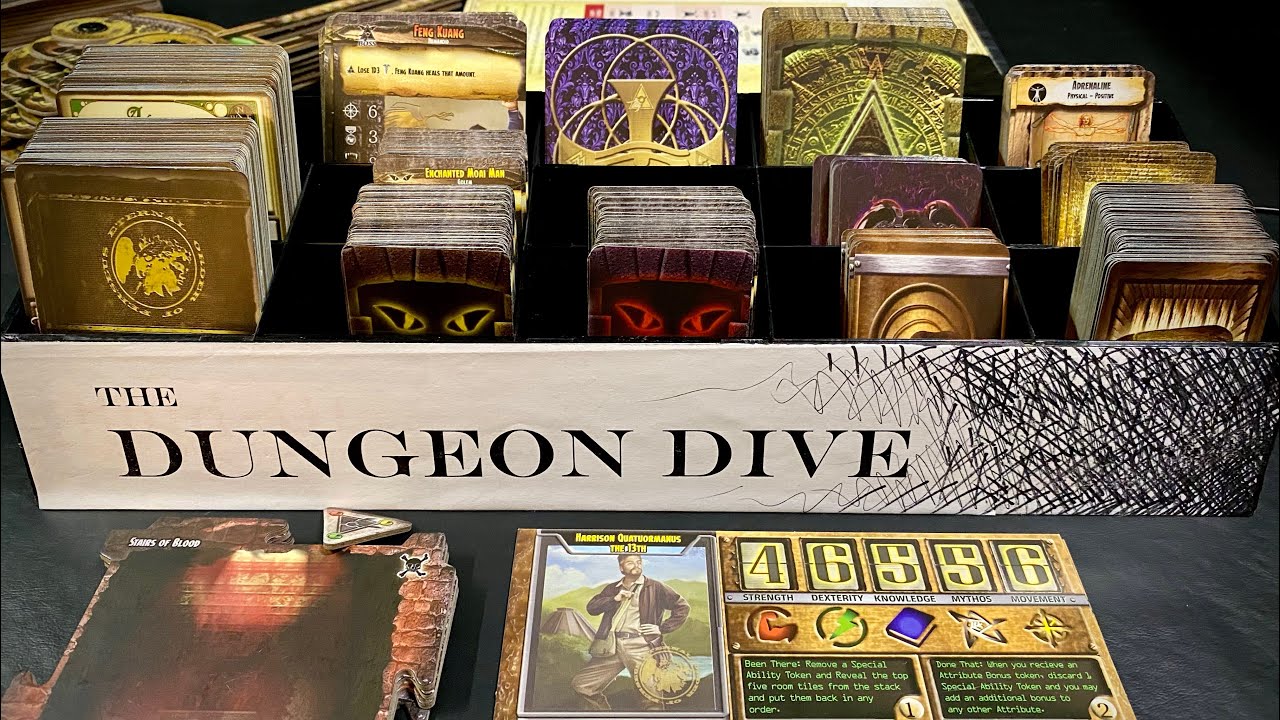
Part two of the four-part Lost Tomb masterclass, this one a deep tour of the card decks. Combat first: Daniel (@dungeondive) praises the single-roll resolution — attack and defence happen on the same dice pool, criticals are unblockable, and natural-one critical misses trigger whatever fail-state the monster card prints. A worked example with Harrison Quartermanus the 13th’s enchanted blade lands four successes against a Dwarvish Whipster.
The search chart gets a breakout — a single token rotates green → yellow → red → green after every search, with green favouring treasure and adventure, yellow risking spawns, and red carrying the highest danger and the only path to artifacts. A press-your-luck loop layered onto the crawl.
Bulk of the runtime is the adventure/misadventure deck — roughly 140 cards with all expansions, double-sided. Daniel argues this deck is the channel’s gold standard of narrative encounter cards: tightly enough themed that disparate cards stitch themselves into coincidences (snake-room tile + snake-den misadventure on the same turn). Tours follow on monster cards that double as standees (form and function), the elite-enemy roster (Doppelganger, Hound of Tindalos, Sphinx), companions (the Singing Scimitar is a talking sword; the Soul of Santorini is a soul-token vault enemies can’t see), Soul-Monger XP-bought artifacts, the impossible-to-alphabetise dual-sided status deck, and the green/red tomb deck mix for difficulty tuning.
Daniel says monster-cards-as-standees is the design choice he wants more crawlers to copy. What card-as-component tricks have you wanted to see used more?