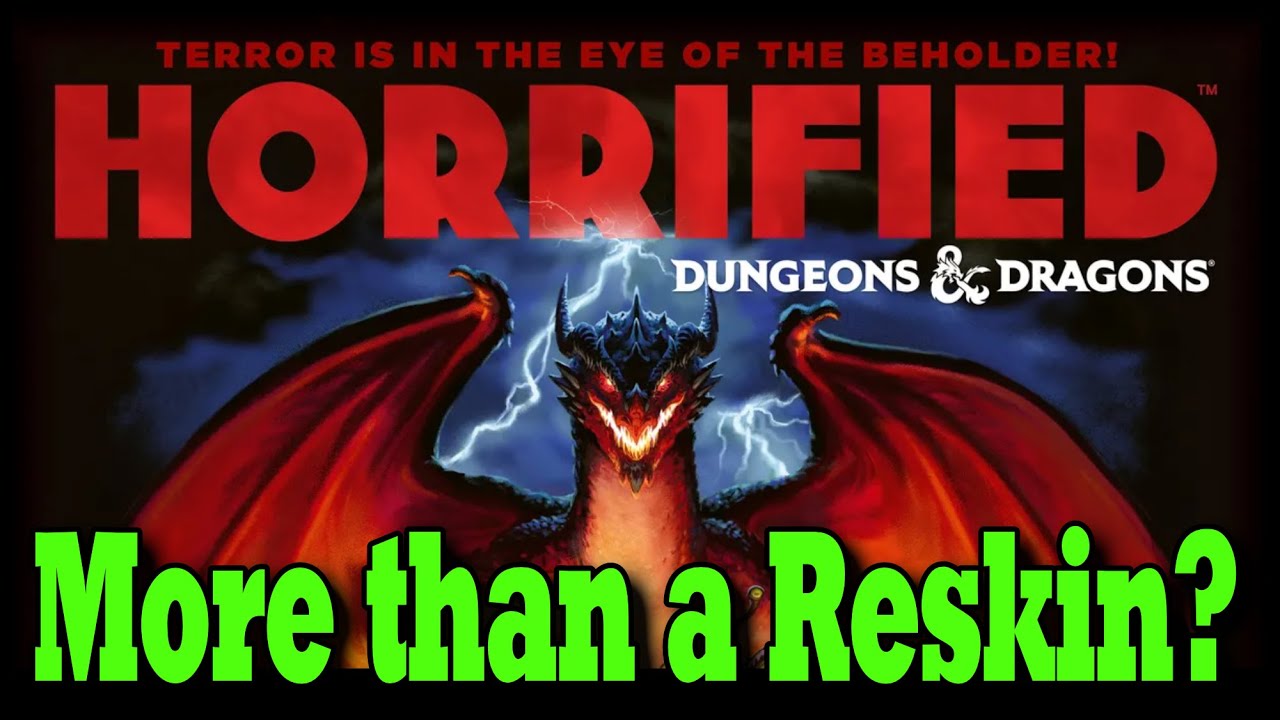
Daniel (@dungeondive) thinks Horrified: Dungeons & Dragons is a pretty cool cooperative board game, though he’s identified what he considers a significant missed opportunity in its design. The game features iconic D&D monsters—red dragon, displacer beast, mimic, and beholder—each with unique encounter mechanics that vary in complexity.
The core gameplay loop is solid: players move heroes around Waterdeep and its dungeon levels, collecting items with different values to fight bosses. Each boss presents a puzzle. The displacer beast requires placing items on numbered positions and rolling a d20 to match your placement; the mimic involves a treasure-hunting mini-game; the dragon features a multi-stage puzzle with a sliding-piece mini-game. The beholder randomizes its attacks using a special d20 table that determines which eye-stalk ability it uses.
Heroes also have randomized special abilities triggered by d20 rolls with ranges (2-8, 9-15, 16-19, and rolling a 20) that might fail, partially succeed, or grant bonus perks. Perk cards provide powerful effects—modifying rolls, skipping monster phases, repositioning heroes—creating meaningful come-from-behind moments.
However, Daniel’s main critique: the game desperately needed minion mechanics instead of civilian rescues. D&D is fundamentally about fighting creatures, yet Horrified relies on the same “escort civilians to safety” mechanic every other Horrified game uses. Imagine instead if each dungeon area spawned thematic enemies—thieves in Waterdeep, goblins in the dungeons, undead in Willowwood. Simple combat rewards and an enemy threshold on the terror track would have made the D&D theme genuinely pop and differentiated this entry from the Universal Monsters version.
The presentation is excellent throughout—vibrant card art, quality components, and minis with stands. The little X tokens for marking beholder eyes are cheap and hard to see (Daniel recommends replacing them), but everything else lands well. Games play quickly with efficient turn structure.
As it stands, it’s a solid gateway co-op game that Daniel still enjoys but can’t wholeheartedly recommend to D&D fans specifically. He loves the original Universal Monsters version far more, and this one feels like it needed that one crucial design adjustment to truly sing.