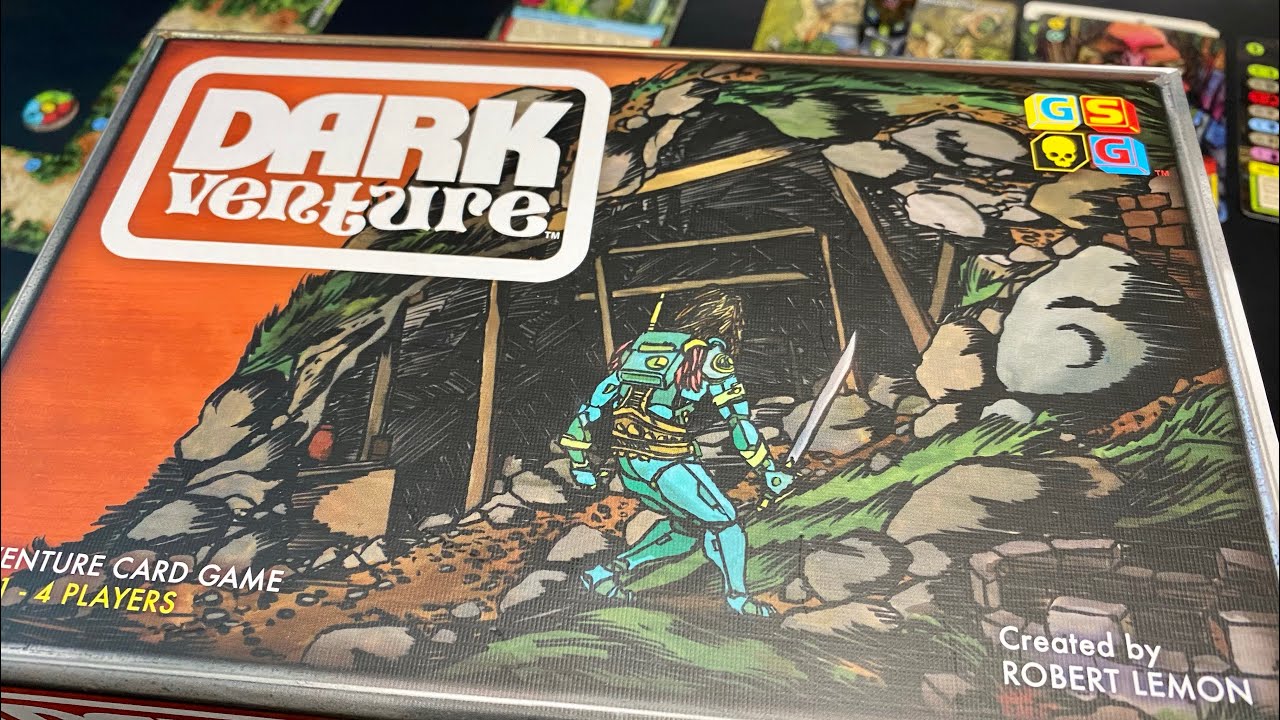
This one is a discussion rather than a review — Daniel (@dungeondive) talking over photographs of a game in progress, testing a new format for the channel. The idea he keeps circling is seeding.
Roguelike video games talk openly about seeds: the run is determined before you start, and a good seed can be shared so strangers face the same challenge. Board games like Dark Venture are seeded too — the shuffle quietly decides which monsters, items, locations and events you will ever meet — but nobody publishes the seed. Daniel wonders why a designer could not say stack your location deck like this, your character deck like this, and hand players a bespoke narrative without writing a word of prose.
His current game is proof of a good one. Princess Bretta needs two wood and one metal to build a rowboat; the opening draw put Deathbed Isle across the water, where a hero materialised out of red smoke and asked to have a curse lifted. Then the Diamond Mine appeared with the sword-obsessed Dirt Twins in it, exactly as a side quest asked him to hoard three blades. To the east, the Egg King is dangling Garl the Warlord off a wall.
The characters have their own wants and vendettas. Daniel compares the pace to a heavily peated Islay scotch — slow on purpose, and not for every evening.
Shared seeds are standard in roguelikes and unheard of in board games. Would you play a stacked-deck seed someone else designed, or is the shuffle the whole point?