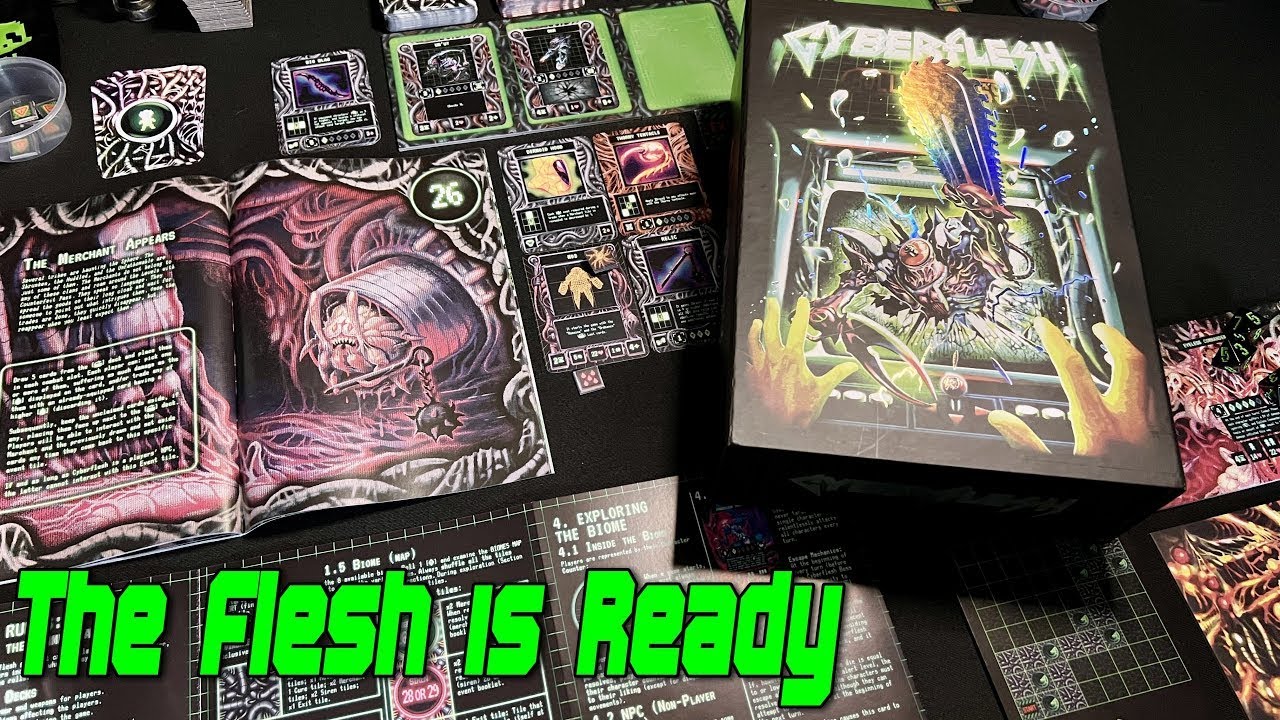
Daniel (@dungeondive) had been waiting impatiently for Cyberflesh to arrive, and the framing he settles on matters more than any rules breakdown: this is fifty per cent game, fifty per cent way to interact with an art project. Hollow Press published Vermis, a sourcebook for a game that does not exist. Cyberflesh asks what happens if you make the sourcebook and the game.
The dungeon is the Stomach Prison, a living maze you escape by triggering two sirens, which raise the alert level and make everything deadlier, then killing a boss to open the exit. The whole system runs on d8s, rolling eight or better, and he puts its simplicity alongside Bag of Dungeon or Glory 2e. What lifts it is everything bolted on. A bestiary art book is glued into the box lid. A thirty-entry Events book supplies encounters keyed to numbered tiles. Loot is bought from merchants with your own health as currency. Necrotic damage kills you at eight regardless of your hit points, so weapons that grant it are a genuine push-your-luck bargain. Mutations rotate through your card slots whether you want them or not.
His one real complaint is the Events book’s thin magazine paper, which he would happily pay to replace. Otherwise he is very happy with it, as game and as object both.
Daniel argues Cyberflesh is best approached as an art object that happens to be playable rather than a game with nice art — does that framing excuse a simple ruleset, or should a boxed game stand on its mechanisms alone?