I would say that, given that standard poker cards can pretty much embed a tremendous amount of information, the answer is… yes, you could have up to 4 cards “hands” have particular meanings of any specificity that doesn’t feel too fiddly. You could assign the suits to particular room contents, elements, tests.
It’s nice that poker cards already have tarot meanings and correspond to elements so mapping it to pre-existing schema is pretty straight forward.
One of the first “projects” I’m working on is, since in my current method certain pairs of adjacent cards define doors (specifically whose max-min = 3 or less), the values of the pairs (within the door pairs) correspond to specific KINDS of doors. Whether locked, dark passages, rope bridges etc.
One thought I have had, is to make the cards double sided, so basically poker cards on both faces, but one face is an “on” toggle and the other is an “off.” That way you can change the state of the rooms by flipping the card without changing the value’s meaning (if that makes sense).
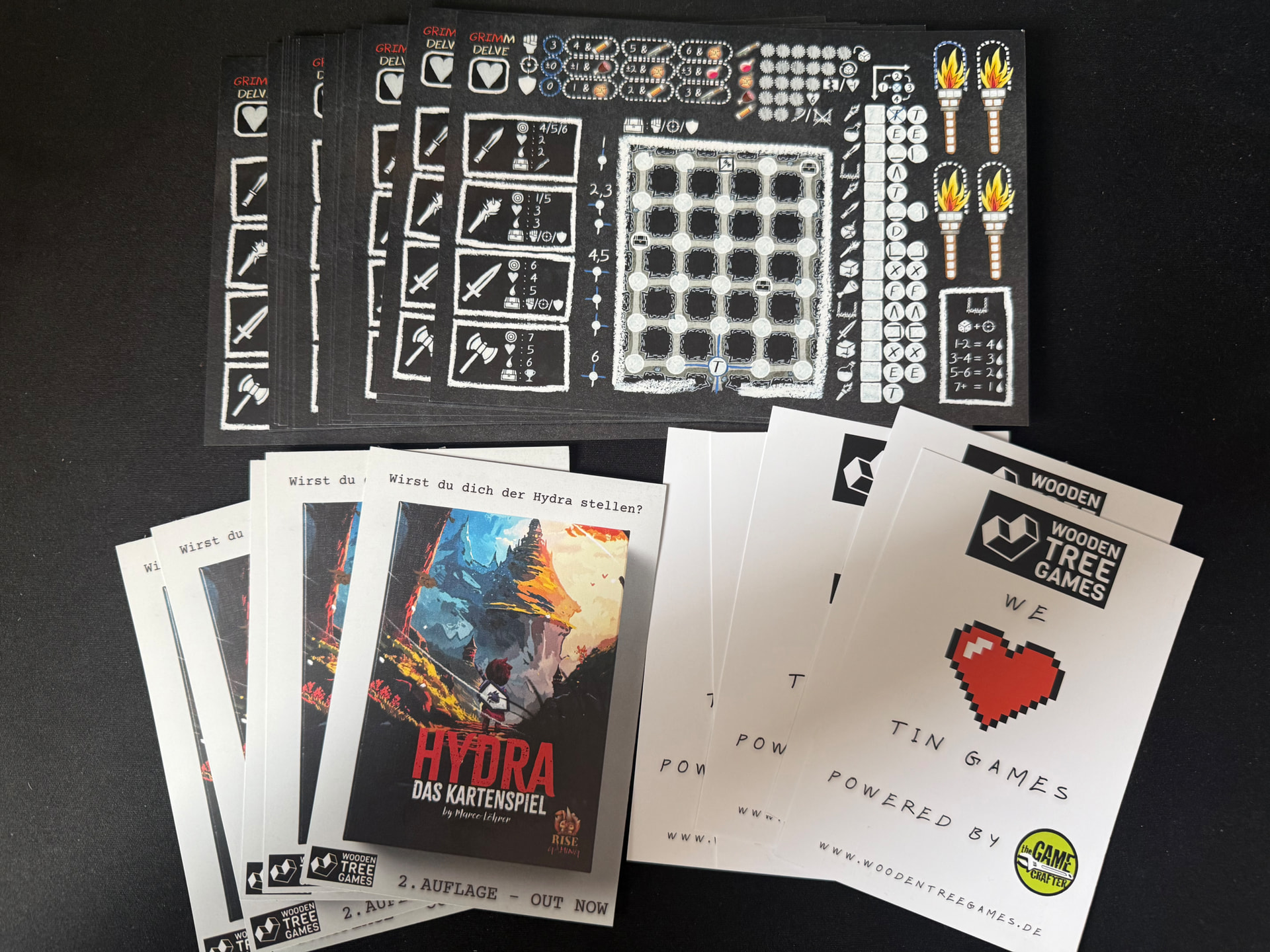
Grimm Delve is the name, it is a solo roll and write dungeon crawler and is now included in each order from a friendly Webshop. It is the black flyer on top of the picture.
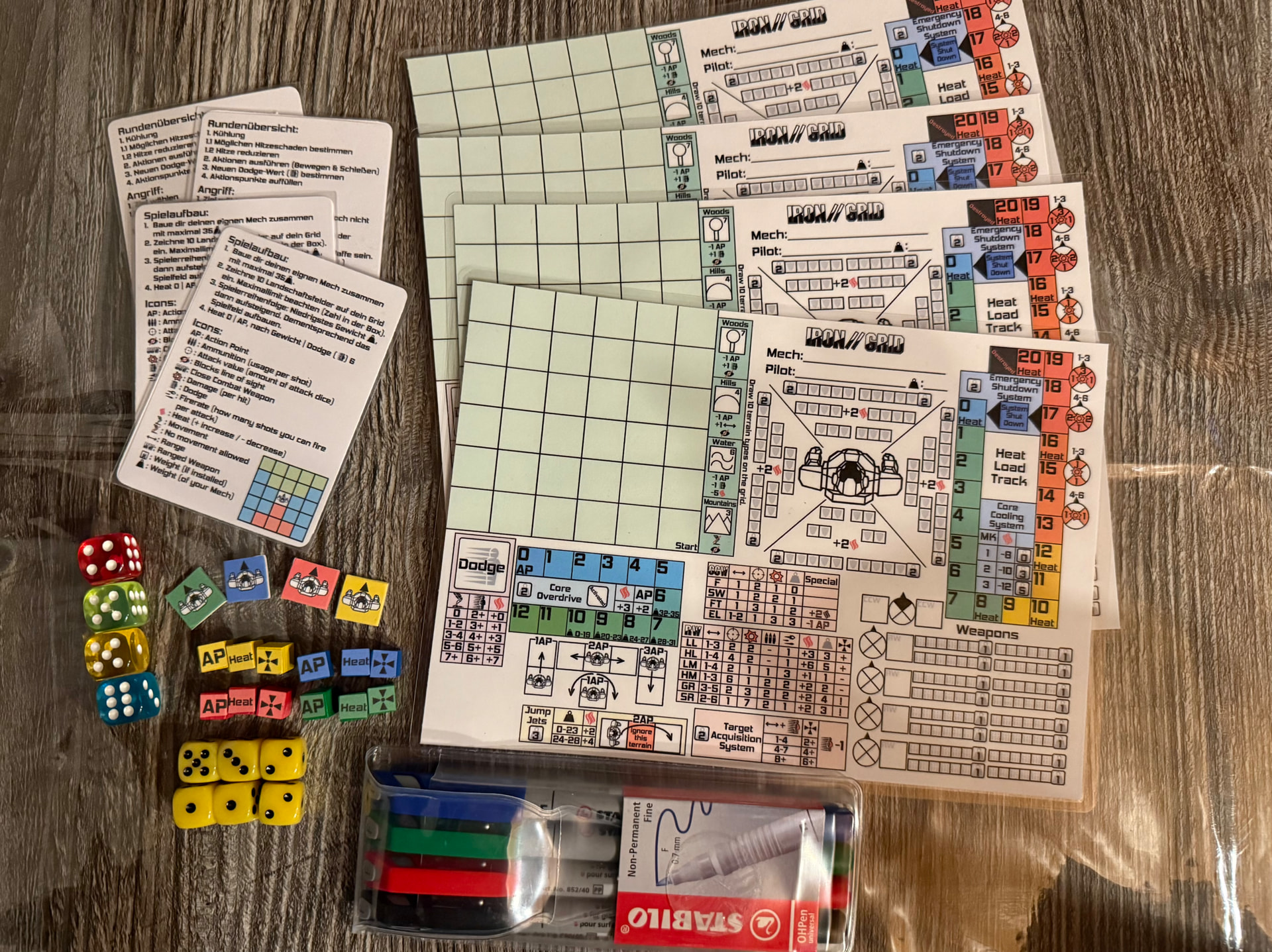
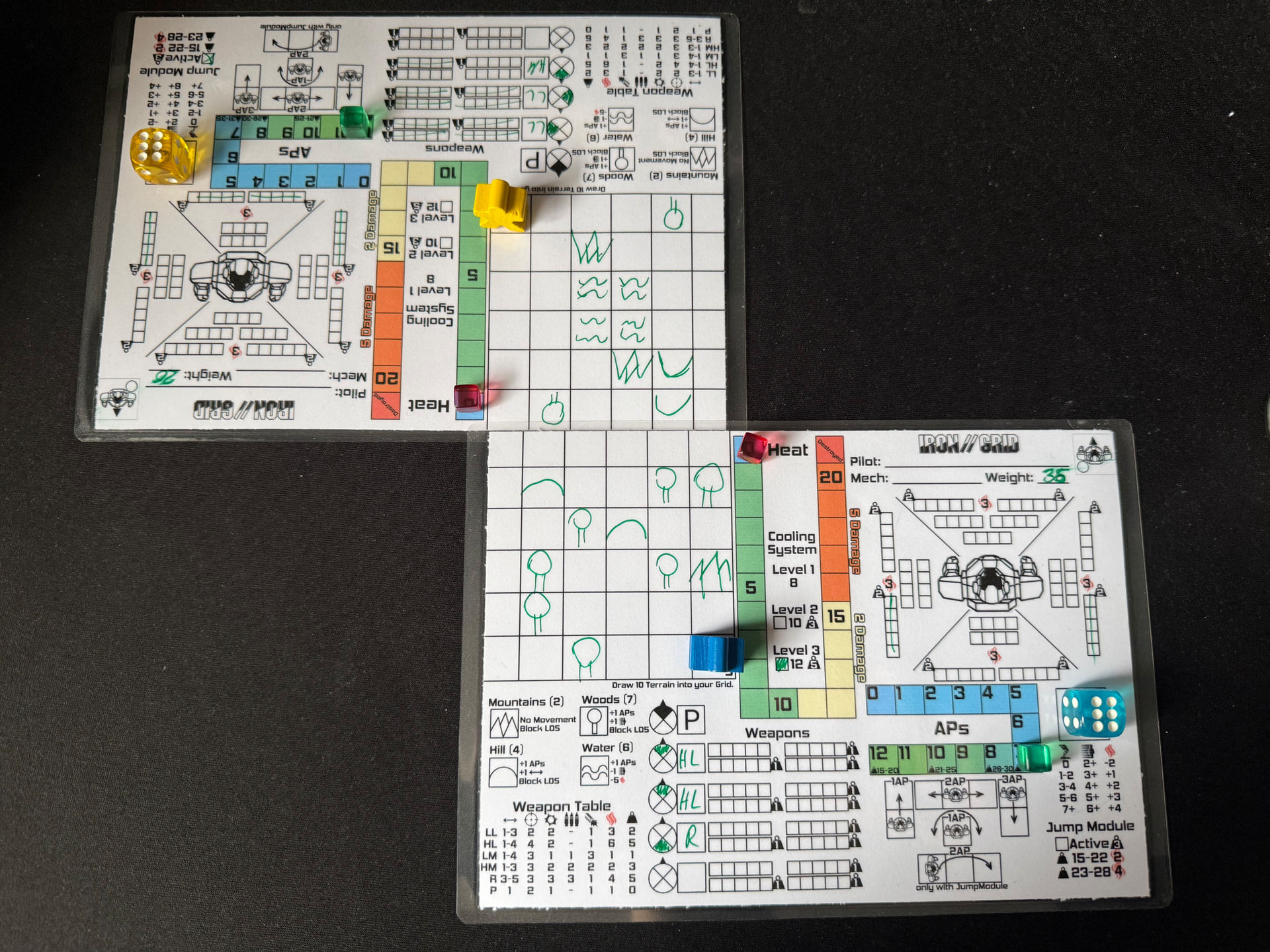
I liked the idea of a game on flyer size so much, that I already worked on the next one, called IRON//GRID.
It is a mech battling game. You create your mech based on weight points and create a part of the Battlemap and then you put the flyers together and have a pvp fight.
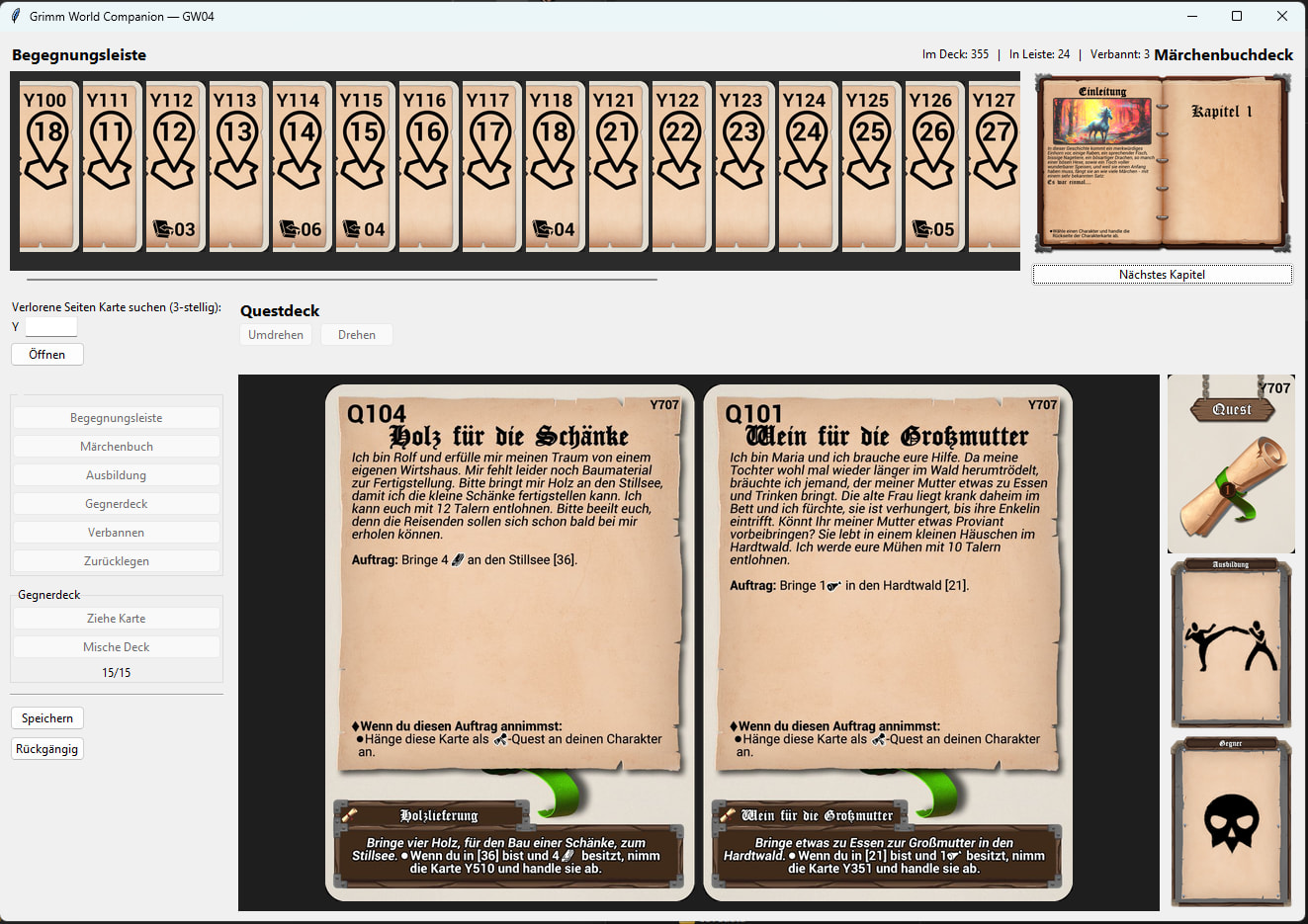
And it is really crazy how good it worked so far. Screenshot is also a bit older, but the tool worked and handle a lot of stuff way faster than doing it with the cards.
Farm season is in full swing so I’ve had hardly any time to share/contribute here. Just wanted to say love this group, thank you all for being here and loving what you do.
I was working on a combat/skill check resolution system for a game I’ve been working on, and ended up creating the outline of a pretty original deck builder that combines a bunch of the elements of some of my favorite card games:
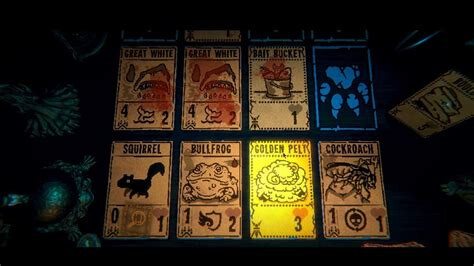
Inscryption (computer game about a card game)
After the Virus (one of the best deck builders ever made IMO)
Heroes of Tenefyr
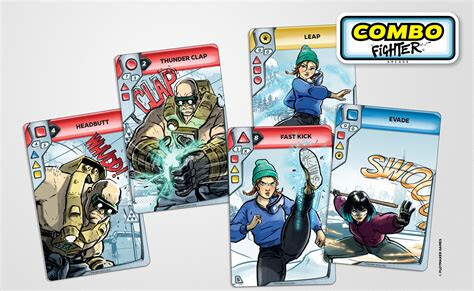
Combo Fighter (anyone remember this one?)
Land Air and Sea
Here is the gist:
You start with a deck of basic cards like most deck builders. The majority of card interactions are Strength (rock), Insight (paper), Cunning (scissor). You have a bunch of rock papers and scissors in your starting deck (3 of each?).
You draw 1 “encounter” card on round 1 (followed by 2 on round 2, and so on) and add it to your discard, and shuffle.
You draw 5 cards, and you MUST play all of them. You have 5 “lanes” with one row for your stuff and another row for “enemies” (like Inscryption). You get to choose how to play them unless the card says where it has to go.
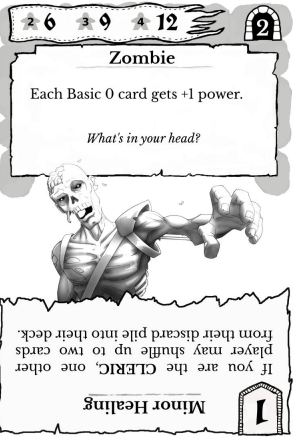
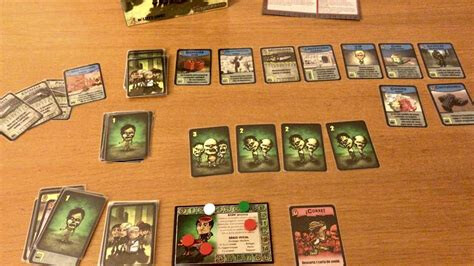
You basically play your hand out, placing your cards how you want, and they face off against the enemy encounter cards. When you beat an encounter, you rotate the card and add it to your row or discard. If you don’t beat it… you don’t rotate it, and add it to your (or your opponent’s) discard. This is like the zombie system in After the Virus.
Once one of your cards has been used as a defender, it is discarded. Once again like after the Virus, the cards you play stay in play until they are used.
So in short, the “cost” of a card is the “cost” of trying to defeat it, and if you fail to defeat it, it becomes an attack on another player.
I haven’t gone into too much detail, but the design space for this is huge. Enemy cards that move between lanes, cards with multiple life points, that attack with combinations of skills (scissor scissor rock!) returning cards from your discard, drawing cards, combos…
This can be a coop game, a semi-coop game, a solo game, a deck builder or even deck construction (where you build your own “encounter” deck to draw from).
But here is the catch. I have no theme. This is purely mechanical. Help! It was supposed to be a dungeon crawler lol.
I wanted events, surprise, exploration, a combat system that wasn’t number crunching. You know… all the good stuff. And this system can sort of do all of it. It’s got an interesting but simple combat system. A way to do skill checks (draw a card and count the # of each icon… you need X Cunning to pass).
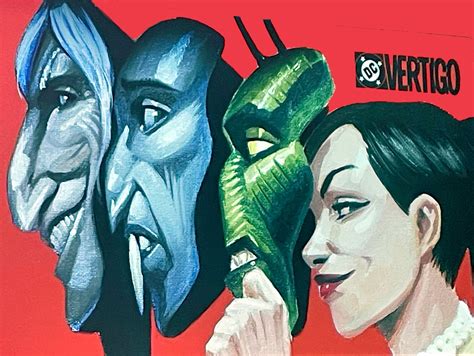
Hey Everyone! My Newest Comic, Hide Nor Hair, was just announced at NYCC. Drawn and colored by the awesome Bob Quinn with letters from Lucas Gattoni, the comic will be a six issue series from Vertigo starting in January.
I’m over the moon to have this come out. It’s an idea that’s been going in some form or fashion since 2018 with the pitch to DC to today being almost 2 years in itself. The bullshit logline pitch is, a film noir-era makeup artist who designs masks for Hollywood that suddenly come alive but the book is more about creating art, what it means to us, and how it impacts folks. I’m linking an article here but feel free to ask any questions you like.
Wow, congratulations! I’m probably less familiar with comics on here than some, but the majority of what I have read was from Vertigo. I’ll be sure to go looking for it come January!
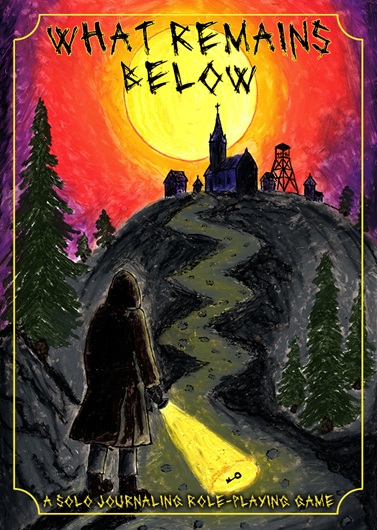
I’ve been working a bit lately, and this is what came out of it. I’ve created a second (mini) solo journaling RPG called What Remains Below. In it, you visit your old, abandoned hometown and try to piece together your past after your memories are called into question by a few diary pages you find.
The game will be available as a free download starting October 31. It fits on a single page, and all you need to play are 2 D6, a piece of paper, and a pen.
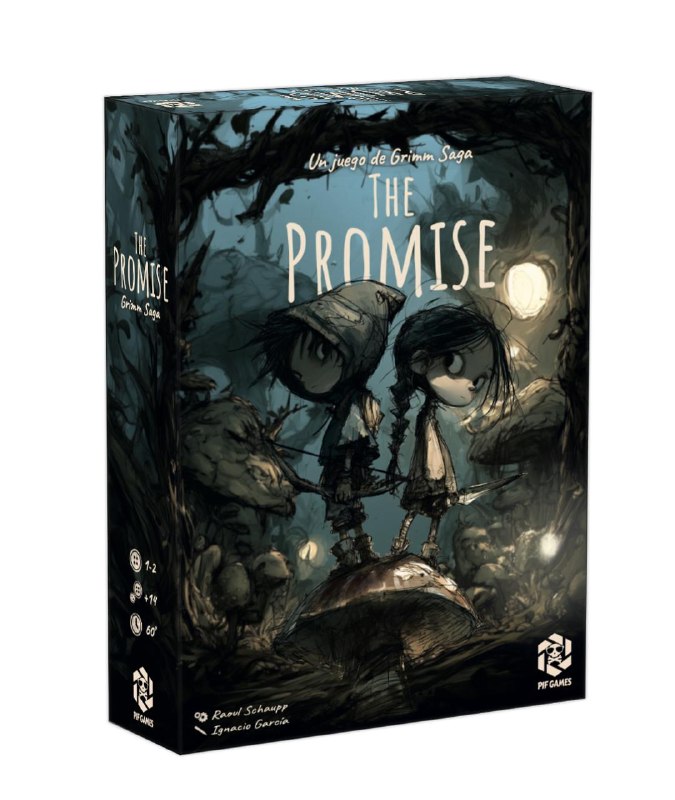
Other than that, PIF Games reached out to me and asked if they could publish my boss battler, The Promise. I thoughtlessly said yes, and of course they wanted to expand the scope of the game a bit. So for the past three months, I’ve been working on more than doubling the game’s content, and I’m still at it. But it’s a ton of fun, and I just work better under pressure, since the game is set to be released in Spanish in the spring of 2027 and in English in the fall. Here’s the cover:
Yes, I also really like it. Ignazio was heavily inspired by the movies “Coraline” and “Nightmare before Christmas”, what you especially see at the enemies. More pictures will follow, as soon as the publisher release them
Vast Voids II Crowdsale is happening right now on The Game Crafter! The base game Void Realm and VVI (1st expansion) are also available through the sale!
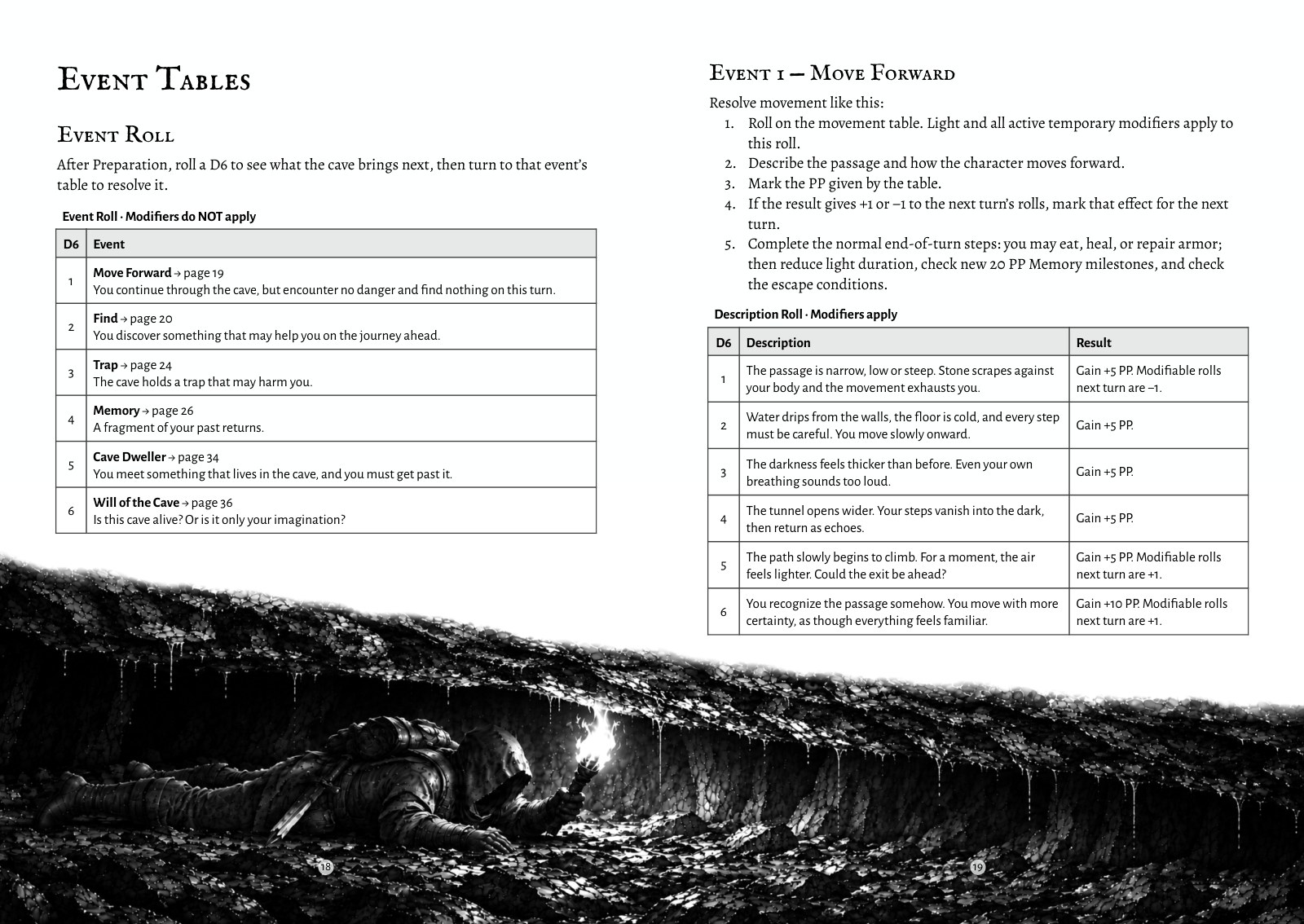
I’m Sven from Estonia, new to the forum. I’ve been playing all kinds of TTRPGs for more than 20 years, and now my own first game is finally coming together: a small solo D6 dungeon crawler called Six Faces of Darkness.
Over the years I drifted toward heavier games with lots of moving parts (trade, politics, expansions), and lately I’ve been playing SAKE, which I also helped create. But for the last few years an idea kept growing in the back of my head: I wanted to make something minimal, just a D6 and a few tables. The structure is finally in place, the layout is done, and print copies are in proofing now. It should come out around January (fingers crossed).
What’s it about?
You wake up alone in a cave with no memory. You don’t know where you are or who you are. Each turn you either push toward the exit or recover a piece of your past across six stages of your life. The past gives your character a frame, but there’s plenty of room to fill in your own story and memories.
You can play it as a journaling game, building your own story and world, or as a quick crawler if you just want to roll dice, fight monsters and get out of the cave.
All the story, mechanics and text are mine, but since I draw about as well as a one-year-old, I used AI to illustrate my vision. Just wanted to say that up front
I’d love to hear which dark solo D6 crawlers you enjoy, especially ones that let you write your own story.
I love the idea that the diary pages don’t just give you memories but make you doubt the ones you already have. That’s a great twist on the usual “recover your past” structure. I’m curious how you handle contradictions with 2D6: does the roll decide whether a found page confirms or overturns what you wrote before, or is that left to the player? And how fixed are the memories themselves? How much of the character’s story is already written into them, and how much is left to the player’s imagination?


 wonderful box cover