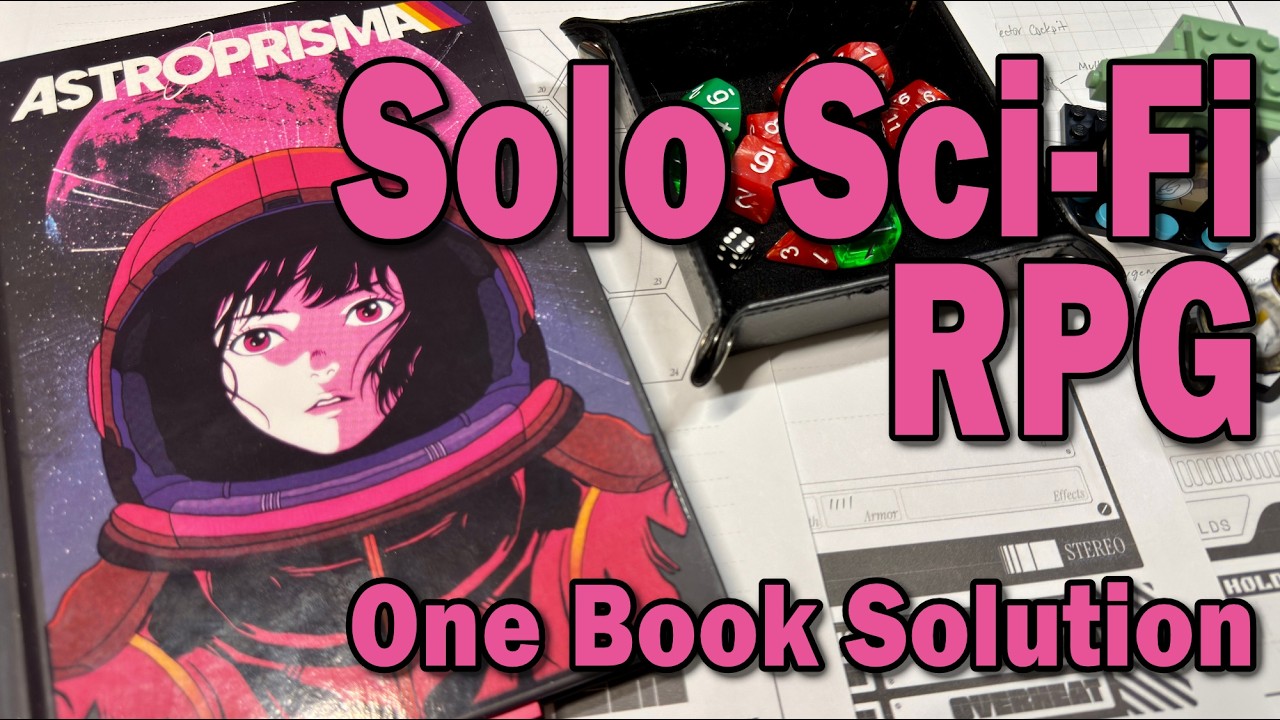
Daniel (@dungeondive) reviews Astroprisma by Camilla Mah, a science-fiction solo RPG he crowns a genuine one-book solution — post-apocalyptic dead-star-system exploration crossed with cyberpunk and anime, arriving (serendipitously, he notes) just as the new Ghost in the Shell series lands. At its core it’s a map-drawing game: win by exploring all 36 hexes across three rings, each with its own encounter tables covering settlements, hostile ships, helios farms, pirate hideouts, and void planets. Around that frame sits a surprising amount of game — five factions to court for missions, cybertech upgrades bought with XP and serum, a modular starship you literally draw piece by piece, hackable everything, drones, narcobiotics, and a deadly no-roll-to-hit combat system where both sides always connect. The play session shows pilot Helio limping around in a shredded ship, botching hull repairs with zero tech skill, getting electrocuted at a drowned research outpost, and fighting fuel-eating void crawlers. Daniel shares a smart house rule along the way: when the narrative mentions a nearby settlement or a stranded NPC’s home planet, seed it onto your map instead of leaving every hex to chance. His one criticism is specific — the cybersphere hacking minigame’s two pages are under-explained and cramped — but the verdict is emphatic: he liked it enough to go back and order the full expansion bundle.
Daniel’s house rule seeds future hexes from narrative clues instead of pure random rolls. Do you let fiction overwrite your procedural generation like that, or does the dice’s authority stay absolute at your table?