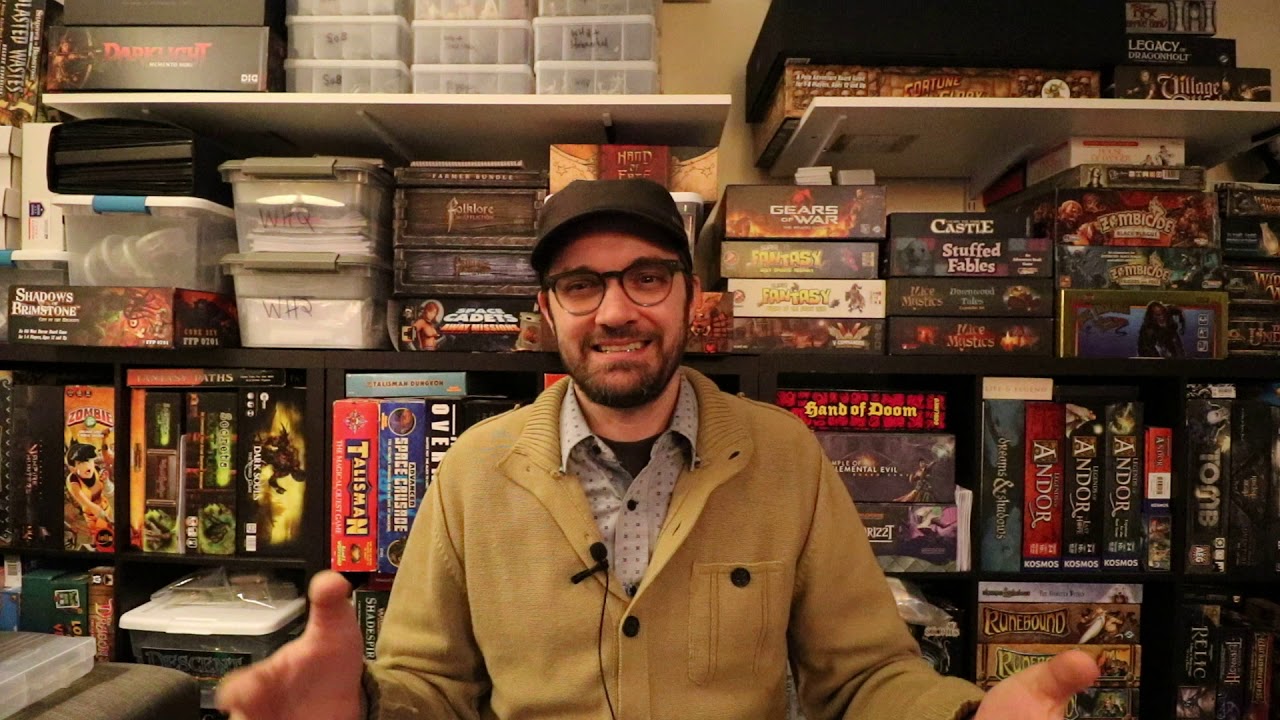
The first episode of a free-flowing discussion series, and Daniel (@dungeondive) opens by answering the question people keep putting to him online: why collect a hundred variations on the same game instead of diversifying? His answer is that a collection is not a personality test. People attach identity to their hobbies, he argues, and that’s a dangerous thing to do — he doesn’t need a shirt announcing what he plays. He can specialise because his wider game group owns roughly a thousand games between them, so any itch outside the genre is already covered.
Then the real answer: nostalgia. He traces it to fourth grade around 1984, playing the D&D red box at a neighbour’s house during the peak of the Satanic Panic — the son of two ministers, doing something he knew wasn’t wrong but which everyone around him feared. From there, Axis & Allies, Fortress America, Shogun, then Games Workshop in high school: Talisman, Space Hulk, and role-playing games played in the science lab at lunch or in a rented hall all Saturday. What he remembers is that it was effortlessly fun, never a big to-do.
He’s careful about what he’s claiming. This isn’t regression — it’s maintenance. Imagination is a tool, and an unused tool goes dull. Adults find it harder to shift into make-believe, so it takes practice, and these games are the practice.
What draws you to the fantasy and dungeon-crawl end of the hobby rather than euros or party games — and can you name the specific watershed moment that put you there?