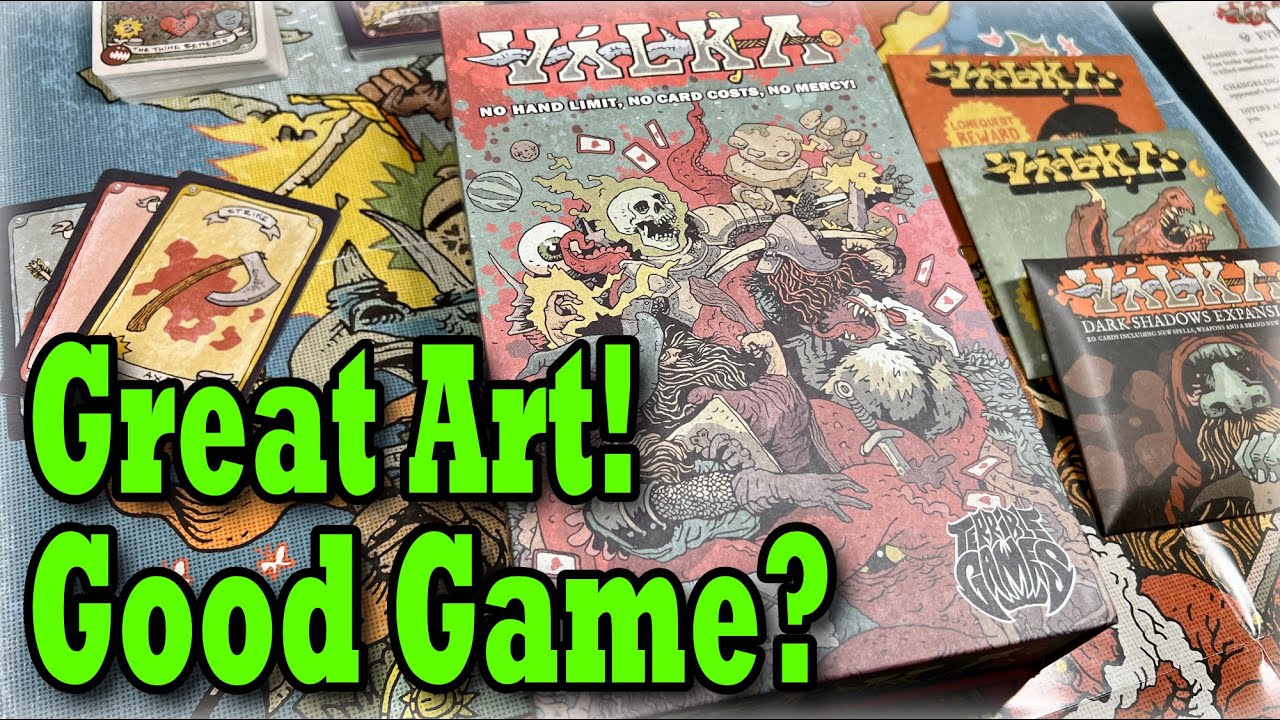
Daniel (@dungeondive) backed Valka primarily for Brook Penrose’s absolutely breathtaking cover art—and yes, the game looks incredible. The post-apocalyptic fantasy world seethes with creature designs that immediately make you lean in for closer inspection. However, translating that stunning aesthetic into engaging solo gameplay has proven trickier. Valka is fundamentally a competitive head-to-head battle game (think simplified Magic: The Gathering with warbands), and while a solo “Lone Quest” variant exists, it struggles with pacing, luck-based location draw order, and combat that can either feel deterministic or spiral into infinite reinforcement loops.
Daniel notes that the solo mode does have potential—user ronin76 posted an excellent community redesign on BoardGameGeek that addresses several structural issues—but as written, the experience doesn’t quite cohere. The absence of meaningful decision-making once you’ve committed fighters and buffs to battle leaves the outcome feeling largely predetermined, similar to other art-driven games that sacrificed mechanical depth for visual appeal. The quest card deck is genuinely cool and offers the foundation for something special, but without tweaks or house rules, Lone Quest doesn’t deliver the drama or tension you’d hope for.
Valka stands as a reminder that even the most stunning presentation can’t carry a game solo if the systems beneath don’t support player agency and meaningful moments of tension and release.
Have you tried Valka’s solo mode, and if so, did you adopt any house rules? For artists and designers out there, how do you balance visual spectacle with mechanical substance?