When it comes to board game design I’ve been trying to achieve several not necessarily compatible things for a long time:
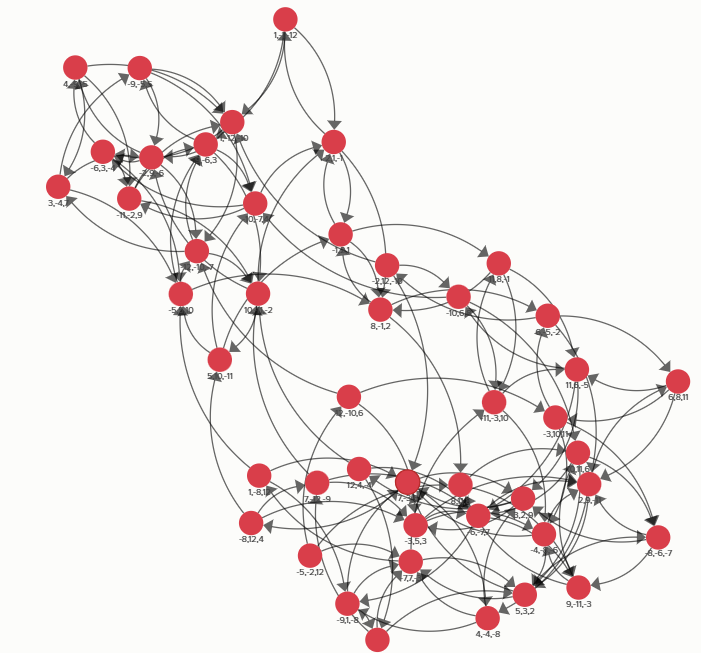
- A Procedurally generated dungeon map akin to Advanced Heroquest/4AD/Warhammer Quest… any of them really that have that “exploration” feel.
- Hidden Information (to allow for semi-coop) so that explorers can travel to different parts of the dungeon without revealing them to each other.
- Tiny Footprint (ideally entirely with cards)
- No Computers (I’m one of those guys who wants to create a computer out of carboard, but elegantly and cleverly).
- A real sense of space (as contrasted with Warhammer Quest the Adventure Card game that is just a randomized linear environment)
I recently started developing an idea after playing some Warhammer Quest (Darkwater) based on the random skirmish/event system that is the narrative engine of the game. **I’m looking for feedback, discussion, ideas, criticisms, both from designers and players of this genre.
**
Here is what you need:
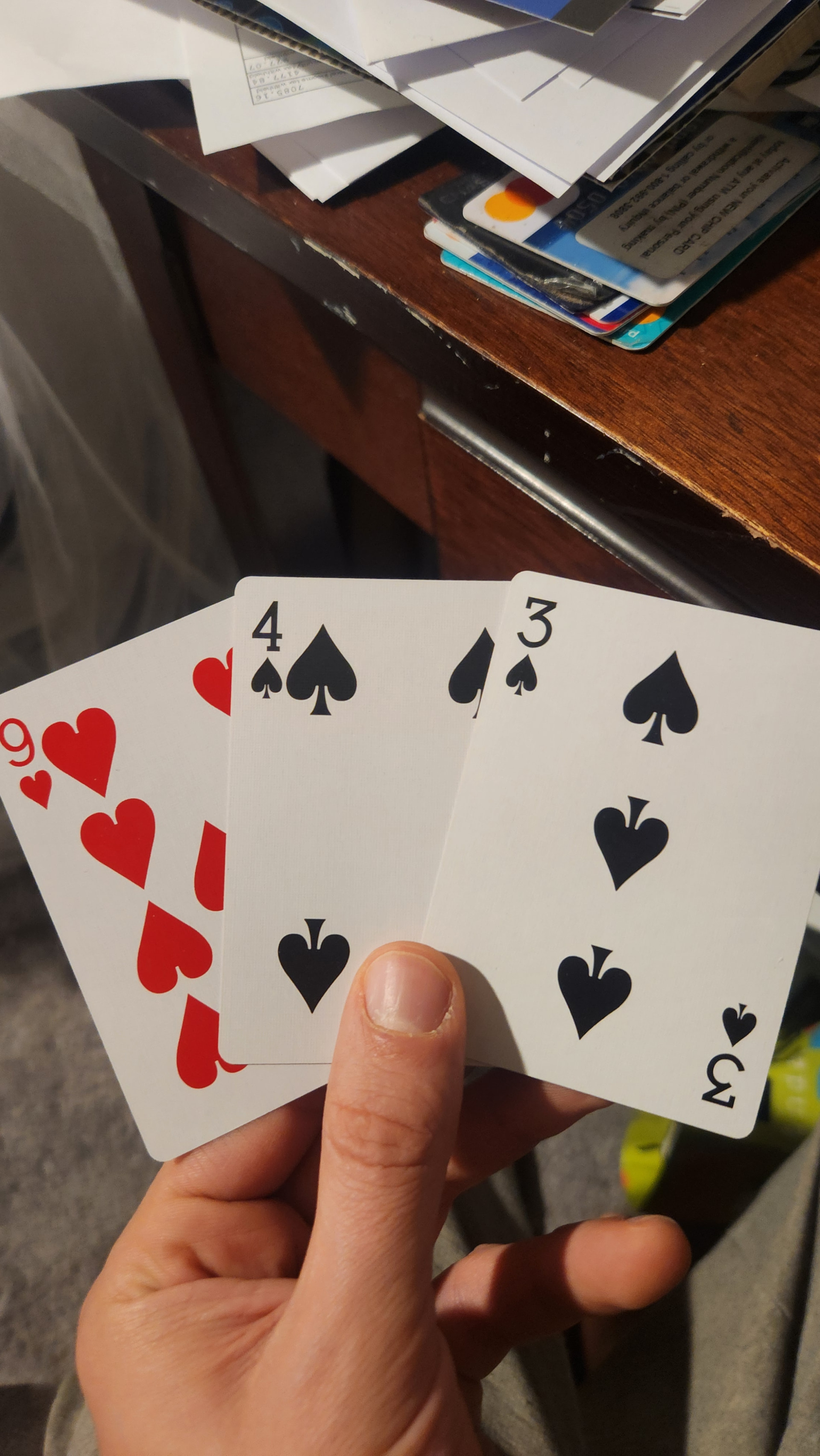
- A Dungeon Deck (a standard deck of cards will work but maybe remove the kings and jokers to just be left with 48 cards (1-12 of each suit).
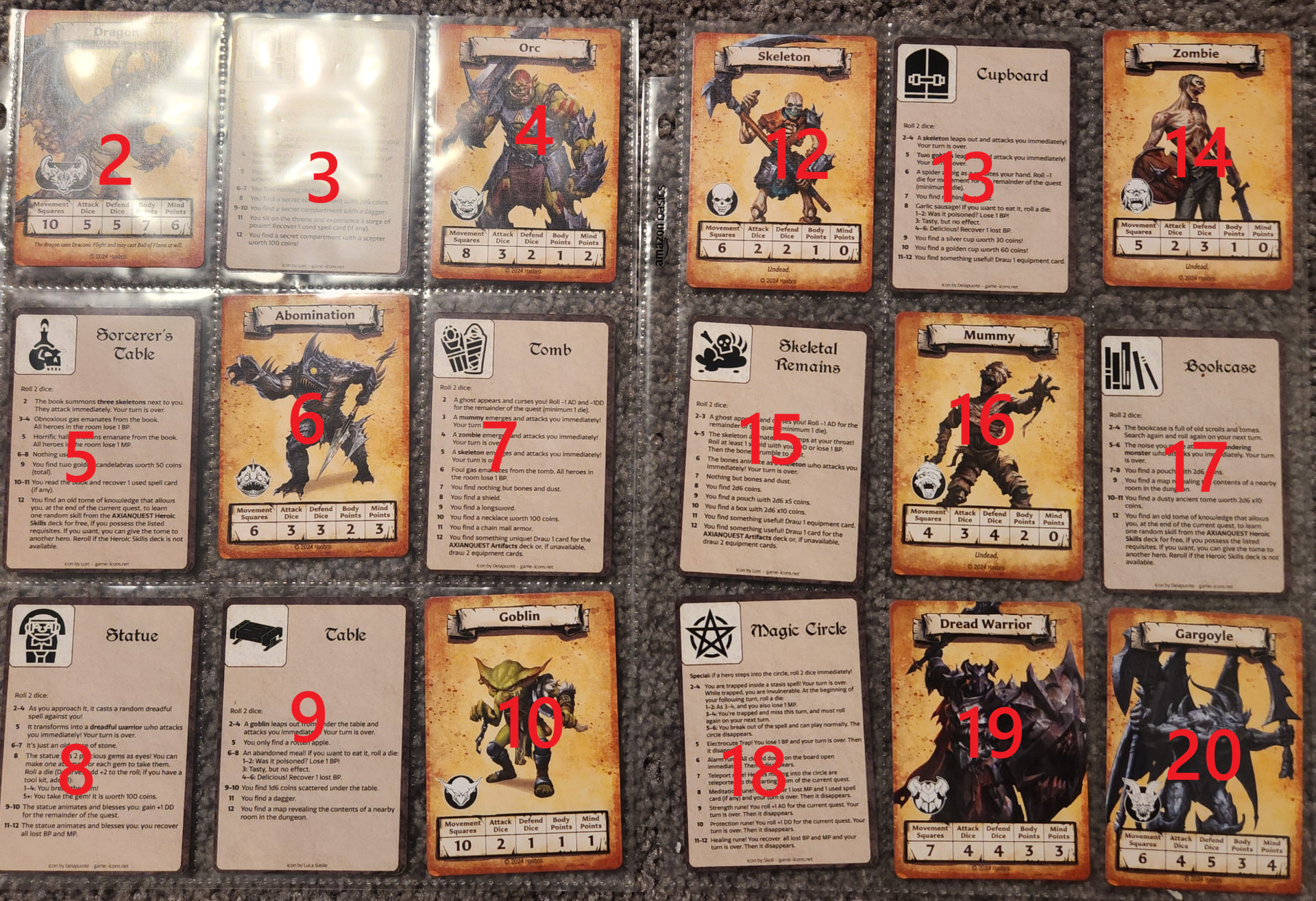
- Several (12?!) Thematically related “Generator Cards.” This will require some explanation-
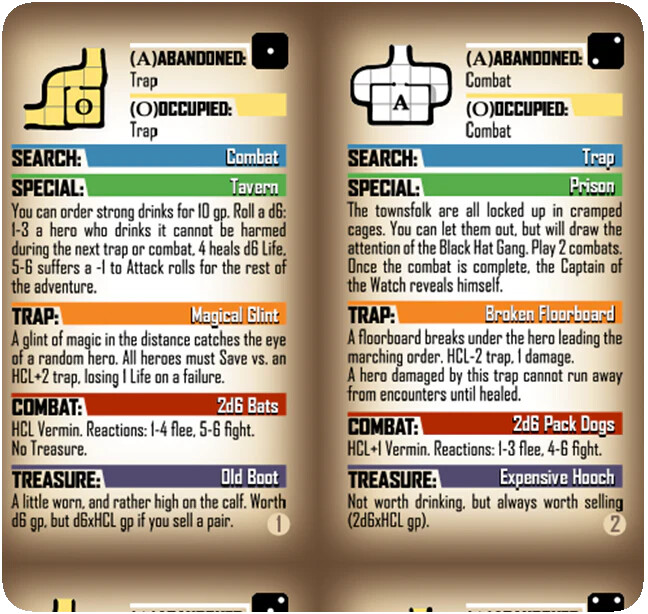
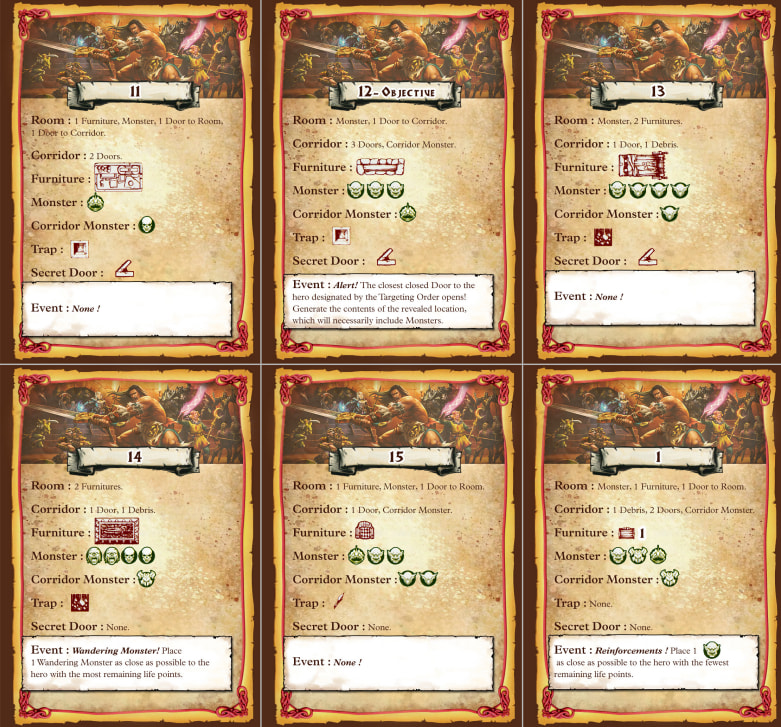
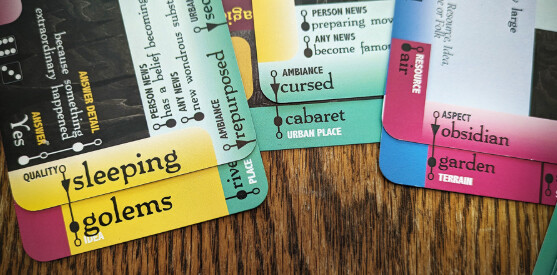
The inspiration for these generator cards comes directly from Four Against Darkness Adventure Decks, HQ SOLO MODE by Gravaillon (hopefully covered by the Dungeon Dive soon), and Down Crawl’s Oracle decks (or any multipurpose oracle deck honestly).
The point of how they work is: Each card has multiple fields generally referring to the content that will populate an Area of the dungeon. So for 4ad they are:
- Room/Corridor Shape
- Encounter Type vs. Area Type
- Search consequence
- Special Feature
- Trap
- Combat
- Treasure
You shuffle the deck and draw multiple cards to populate the “Features” of your new area. So you draw 1 to determine the room/corridor, another to determine the encounter type, and another to populate that encounter. Say, 3 cards to generate an area of the map and its content.
I LOVE THIS. I took this idea and ran with it and created a whole deck of AHQ/HQ Stuff for my own fun. Similarly, Gravaillon used as similar format to populate the rooms in Heroquest for a random dungeon generation with no Zargon. This gets my stamp of approval. Fast, slick, fun, feels good and tactile, no lookup tables. Nice.
Here is how my idea comes together (roughly).
- You shuffle the dungeon deck, and you put a special tactile card (the dungeon entrance) on top. This is “seeding” your dungeon with the arrangement of locations. IT IS INCREDIBLY IMPORTANT THAT THE ORDER OF THESE CARDS REMAINS. You can cut the deck, but as long as you cut it normally, the sequence of cards (if the deck were treated as a loop) remains the same.
-The Dungeon Entrance- Is a visually identical card to the rest of the cards in the dungeon deck, but has something physically different about it. Like a small hole punched in it, or something that can be found WITHOUT LOOKING. In short, even if you cut the deck (putting the top half on the bottom of the deck) you should be able to find the DUNGEON ENTRANCE with your eyes closed and return the deck to its original orientation. (this is easier to show than write but hopefully this makes sense.)
-
You arrange the Generator cards for all players to see. Players can look at them any time. Their arrangement gives them positions 1-12?. So there is generator 1, 2, and so on…
-
On your “turn” You take the dungeon deck under the table (or something out of yours/everyone’s sight) and count a certain number of cards and CUT the deck. That count is secret information only you have. You then secretly draw the top card of the deck and you can look at it. Basically You’re counting down which card you want to peak at, you know how “deep” it is in the dungeon deck. It has a number 1-12. That number corresponds to one of the generator cards.
-
You choose whether it was just scouting or to “enter the area”.
4a. If it was just scouting, you return the card to the top of the deck, then use touch to return the deck to it’s original position (so the dungeon entrance is on the top of the deck and the order of the cards remains the same.) Now you know what card X is in the dungeon deck.
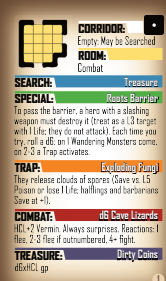
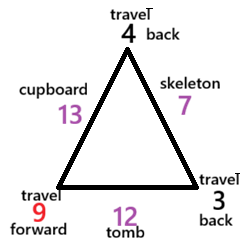
So you know that at position X, there is a room of the above shape, and that there are “roots barriers” and “exploding fungi” and “cave lizards” nearby…
4b. If you “enter the area” you reveal the dungeon card to all players, and then continue drawing cards from the top of the deck and populate the area.
However you play the game itself is up to you… whether it is abstract or hero quest like me using axian quest furniture… The point is that this “dungeon” is fixed in the dungeon deck and the “generation” cards are thematically linked so the things make sense together.
You ultimately return all of the cards (in the same order) back to the deck, and return it to it’s original order (using the dungeon entrance card) and pass it to another player.
So… what does this accomplish?
This creates randomly generated areas that can be traveled to freely. You can learn about “what is nearby” by scouting. You can return to locations later. It creates a sense of “space” that is embedded into the dungeon deck. You can share this information with the other players. You can lie to them in the tavern and say “come with me… I need help with a heist” and leave them to traps.
Every time you travel to a location, the “adjacent cards” will give you information about what is nearby… but you never know exactly what it is going to be until the full set of dungeon cards is used for the generation itself.
That is the ghist of this system! There are lots of other parts I’m working on like:
Having a random event each time you travel between locations (so there is also a cost to scouting in solo). A party system where people can join you to go somewhere together directly… or secretly follow you.
Ask me questions? Tell me what you think?