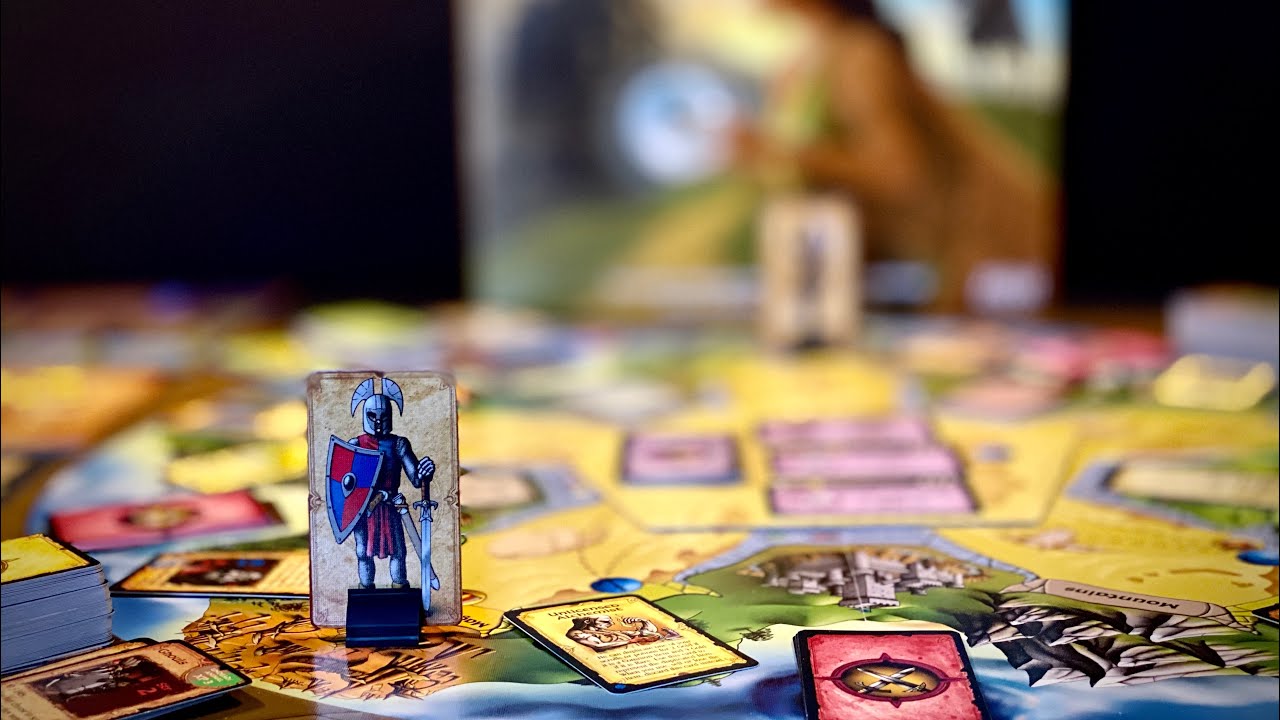
Daniel (@dungeondive) sets up Prophecy — Vlaada Chvátil’s 2004 fantasy romp, later reprinted by Z-Man — with both expansions on the table and a co-op variant running solo, and spends the video working out where it sits against the two games it will always be measured by.
The board is a globe rather than a track, ringed with civilisation and wilderness spaces and five astral planes that function as boss sites: kill a lesser guardian, kill a greater guardian, collect five artifacts. A chance deck seeds encounters, treasure maps and merchants — and, notably, never punishes you outright. The co-op rules from Dragon Realm handle difficulty by seeding tokens that bulk out the guardians’ stats, so the party needs time to grow before it can swing.
The real argument is about resources. Health doubles as strength, willpower doubles as magic, and both are currencies you spend down and claw back. Movement isn’t a die roll at all — one gold hops between ports, two gold opens a magic gate, one gold rents a horse for two spaces. Daniel likes that tactical layer a great deal.
His ranking is blunt: Talisman 2nd edition first, on art and character variety; Runebound second; Prophecy third. The characters barely differ, the art has only low-budget charm, and nothing in it is as memorable as being turned into a frog. He still sets it up about once a year.
Prophecy trades random movement for spending gold to get around. Does paying for movement make an ameritrash adventure better, or just slower?