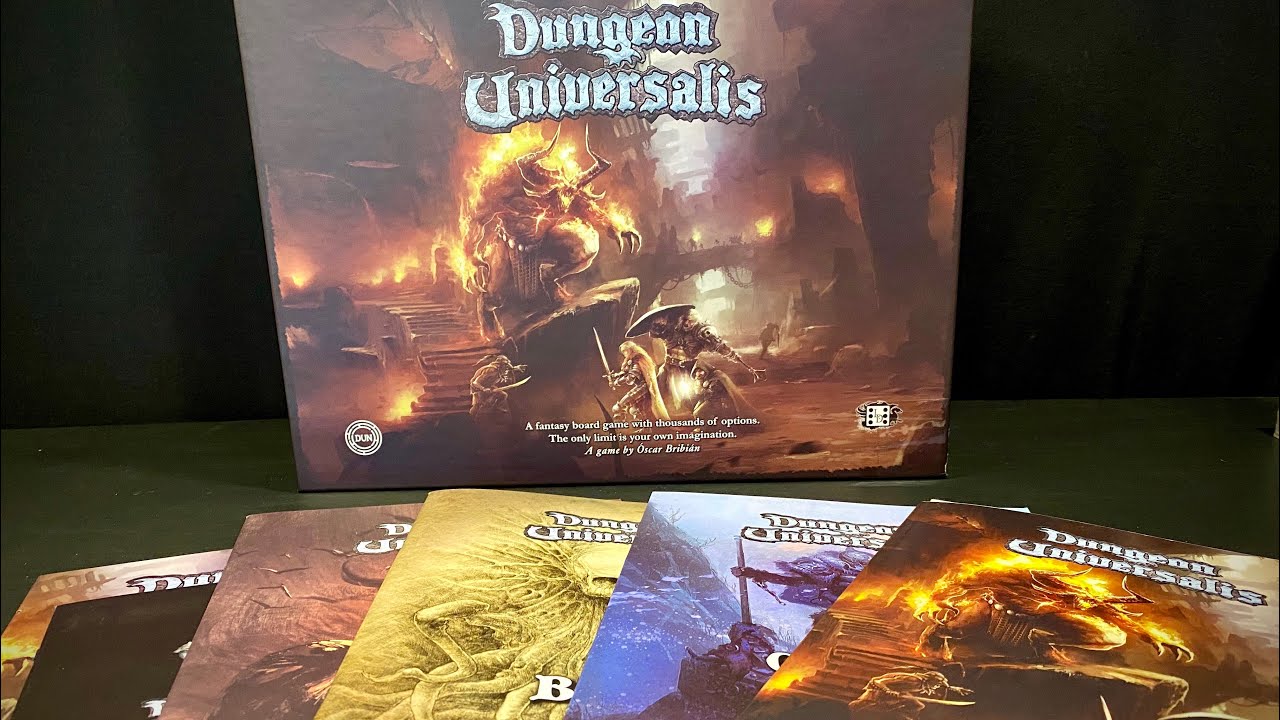
Daniel (@dungeondive) opens the first multi-part deep dive into Dungeon Universalis, Oscar Bribián’s Spanish-designed kitchen-sink dungeon crawl from Ludic Dragon Games. Backed on Kickstarter in 2017, delivered in 2020 less than a year late despite an English-card-error reprint and COVID-19 — a remarkable feat for a first-time creator.
Part one walks the books only. The 120-page rulebook is perfect-bound, well-illustrated with over a thousand pieces of unique art, and despite an obvious-but-functional translation reads better than expected. The 92-page Campaign & Quest Book holds the main 20-mission campaign (Return of Rozaball), two smaller campaigns, a stack of independent quests, and “epic event” side-quests. Two complete bestiaries cover dozens of factions — undead, ork tribes, dragons, elementals, beasts, plus mundane animals like horses and lions for hunting expeditions. A small bonus quest book holds solo mini-adventures for each named hero from Oscar’s novel-derived setting.
The headline impression is scope. The game wants to be every dungeon crawl at once: 1-vs-many, full co-op, an app-driven hidden-information solo mode, online play through a Tabletop Simulator-style app, an upcoming random-quest generator, and rules for jumping, swimming, climbing, falling, and 16 schools of magic. Daniel calls it a “toolbox” — the design philosophy is to write a rule for everything anyone might want to do, and trust the players to ignore what doesn’t suit them.
Daniel admits already that he’ll never play this game 100% correctly. Do you adapt to a sprawling design by mastering it, or by selectively ignoring rules until the game fits your table — and which approach has served you better long-term?