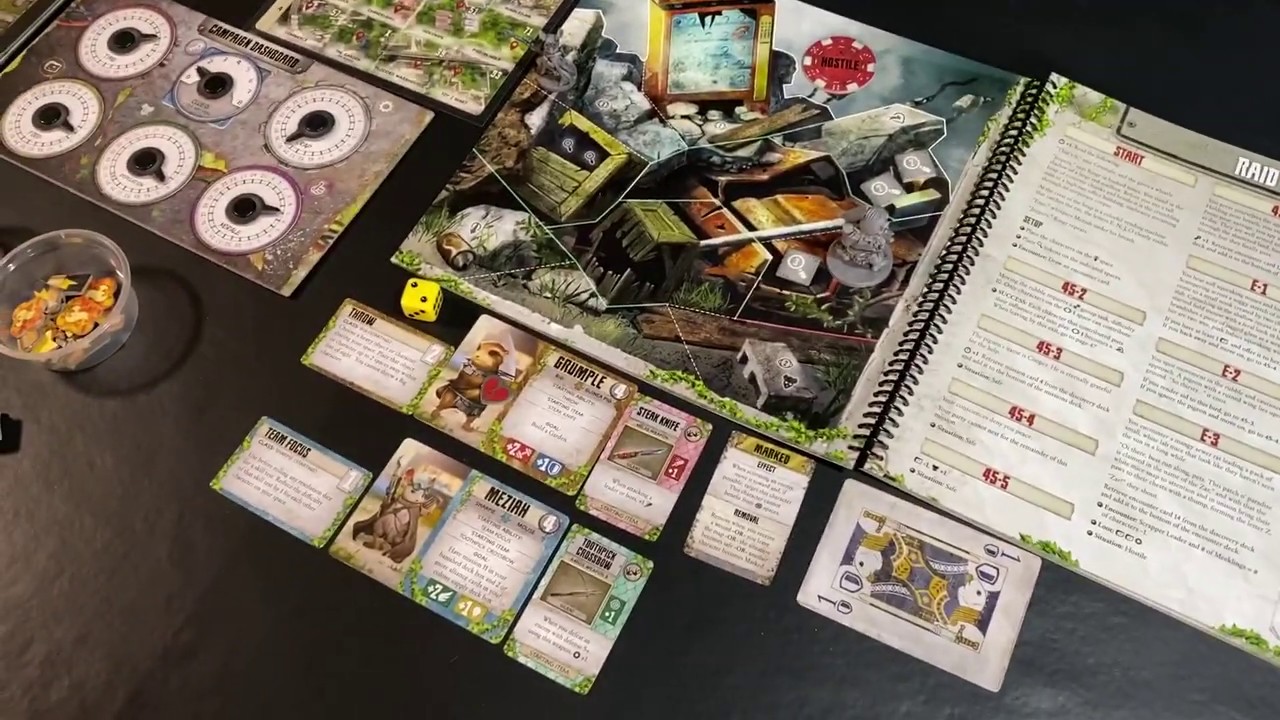
Before the chapter starts, Daniel (@dungeondive) spends a few minutes on the cleverest design choice in Aftermath: the encounter card / storybook crosslink. Each map page in the storybook has up to three E-marked passages (E1, E2, E3). When the encounter deck delivers an E-card, you read the matching passage on the current page. So a single E1 card represents potentially thirty different narrative encounters across the campaign — non-combat vignettes, NPC meetings, moral choices, recruitable critters. He calls it one of the smartest uses of a small card deck he’s seen.
The party then works its way up the rubble heap toward Enjo’s coin slot. Grumpel finds a hand cannon (the comic image of a guinea-pig druid wielding a sawed-off shotgun does not escape Daniel). The Toxic Water and Crawling Threat mission cards added in part two stay queued. The chapter also surfaces a mechanic that hasn’t fired yet: the Hunt. Enemies left alive on a hostile situation map don’t just disappear when you exit — they migrate to the Hunt card and chase you to the next map. The cockroach swarm earned this run will, Daniel suspects, come back to haunt the boss fight.
The chapter ends with another Group Task to push past Enjo’s last spring mechanism.
The Hunt mechanic carries unfought enemies from one map to the next as a separate pressure stream. Does that change how you’d play a retreat-and-regroup round, knowing the enemies are coming with you?